
데이터 보존
데이터 보존, 신속 동결 및 IP 주소 보존
가입자의 요청에 몇 초 만에 응답하고, 독일에서 계획 중인 데이터 즉시 동결 및 IP 주소 보존 조치에 대비하며, 모든 단계에 대한 완전한 감사 추적을 유지하십시오.
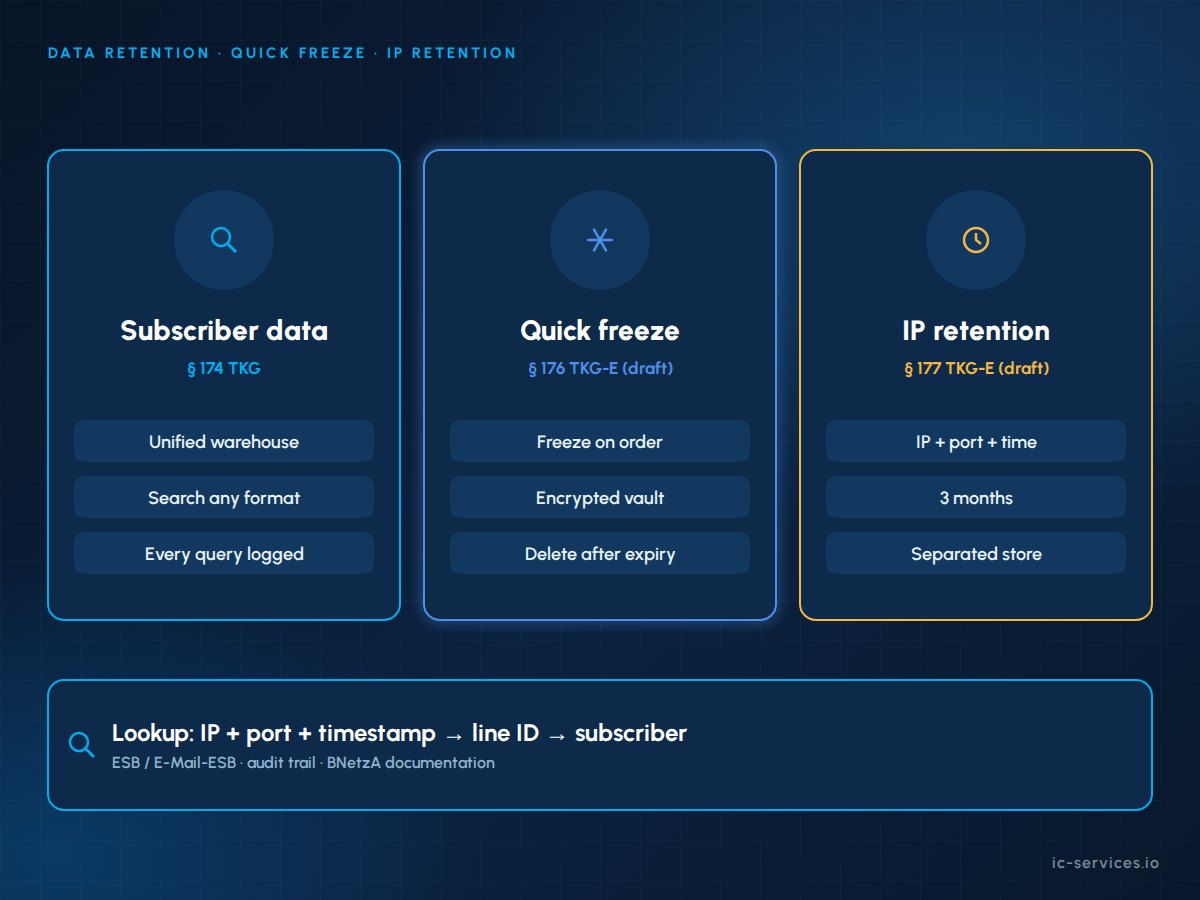
데이터 보존이란 통신 사업자가 법률에 따라 보관, 유지 또는 공개해야 하는 통신 데이터를 안전하게 저장, 검색 및 감사하는 것을 말합니다. ICS의 데이터 보존 솔루션은 가입자 데이터 요청, 독일에서 계획 중인 ‘신속 동결’ 조치 및 IP 주소 보존을 포괄하며, 전 과정에 걸쳐 증거 관리 체인(chain-of-custody)과 감사 추적 기능을 제공합니다. 이 솔루션은 ICS의 합법적 감청 플랫폼과 연동됩니다.
주요 사실
- 구독자 데이터 웨어하우스: 당국의 구독자 요청에 몇 시간이 아닌 단 몇 초 만에 응답합니다.
- 귀사의 사업장 내에서: 귀사의 인프라에 배포되므로, 데이터가 귀사의 네트워크를 벗어나는 일이 절대 없습니다.
- 급속 냉동 (§ 176 TKG-E): 위치 정보를 포함한 트래픽 데이터(콘텐츠 제외), 최대 3개월간 보관하며, 법원 명령에 따라 최대 3개월을 추가로 보관할 수 있다.
- IP 주소 보존 (§ 177 TKG-E): 인터넷 접속 제공자는 IP 할당 정보를 별도의 저장소에 3개월 동안 보관해야 한다.
- 인계: 보존된 데이터는 ETSI TS 102 657을 따릅니다.
- 법적 지위: TKG-E 제175조~제177조는 정부 초안(BT-Drs. 21/6581)이며, 향후 변경될 수 있습니다.
데이터 보존 의무는 독일의 서비스 제공업체들에게 어떤 의미를 갖는가?
현재, 서비스 제공업체들은 다음 규정에 따라 가입자의 데이터 요청에 응하고 있습니다. § 174 TKG 그리고 당국의 통신 데이터 제공 요청. 2026년 8월 18일부터는 전자증거 규정(e-Evidence Regulation)에 따른 유럽 생산 및 보존 명령도 적용됩니다.
정부 초안에는 두 가지 새로운 조치가 추가되었다. ‘신속 동결’ 조항은 당국이 개별 명령을 통해 기존 통신 데이터를 보존할 수 있도록 한다. ‘IP 주소 보존’ 조항은 인터넷 접속 제공업체가 모든 연결에 대한 IP 할당 정보를 저장하도록 의무화한다. 모든 요청 유형에 대해 신속하고, 완전하며, 기밀이 보장되고, 기록이 남는 답변이 제공되어야 한다.
법적 지위
신속 차단(TKG-E 제176조) 및 IP 주소 보존(TKG-E 제177조)은 정부 법안 초안 BT-Drs. 21/6581에 포함되어 있습니다. 이 법안은 독일 연방의회 1차 심의 2026년 6월 24일에 상정되었으며, 현재 위원회 심의 중입니다. 세부 사항은 변경될 수 있으며, ICS는 법안 내용이 수정됨에 따라 서비스를 업데이트합니다.
구독자 데이터 웨어하우스는 어떻게 요청 처리 속도를 높여주나요?
가입자 데이터는 대개 청구, 프로비저닝, CRM 및 레거시 시스템 등 여러 사일로에 분산되어 있습니다. 각 시스템을 일일이 수동으로 검색하려면 몇 시간이 걸립니다. ICS 가입자 데이터 웨어하우스는 기존 시스템을 교체하지 않고도 이러한 데이터를 한곳에 통합합니다.
- 사용자 정의 ETL 파이프라인: 마이그레이션 없이 데이터를 추출하고, 전화번호와 주소를 정규화한 뒤, 모든 데이터를 하나의 인덱싱된 데이터 웨어하우스에 로드합니다.
- 빠른 전체 텍스트 검색: 어떤 형식의 전화번호로든 가입자를 찾을 수 있습니다.
- 증분 동기화: 변경 사항은 몇 분 안에 반영됩니다.
- 기록된 모든 검색: 각 요청에 대한 완전한 감사 추적 기록.
- ETSI 호환 API: 요청 처리에 연결됩니다.
이 데이터 웨어하우스는 클라우드에 의존하지 않고 귀사의 인프라에서 운영됩니다. 완전한 감사 로깅 기능을 갖춘 오픈소스 구성 요소 기반으로 구축되었으며, 데이터의 소유권은 귀사에 있습니다.
창고는 어떻게 구축되나요?
1
디스커버리
ICS는 데이터 소스, 형식 및 요청 프로세스를 매핑합니다.
2
빌드
이 팀은 ETL 파이프라인과 검색 인덱스를 개발합니다.
3
배포
이 창고는 귀사의 인프라에 구축되어 있습니다. 데이터는 귀사의 네트워크를 절대 벗어나지 않습니다.
4
기차
직원들은 요청 사항을 검색하고, 답변하며, 기록하는 방법을 익히게 됩니다.
ICS는 긴급 냉동 주문을 어떻게 처리하나요?
신속 동결 명령(Sicherungsanordnung)은 통신 사업자로 하여금 지체 없이 통신 트래픽 데이터를 보존하도록 의무화합니다. 이 초안은 해당 명령의 법적 근거를 형사소송법(StPO) 제100g조에 두고 있으며, 통신사업자의 의무를 통신법(TKG-E) 제176조에 명시하고 있습니다. 여기에는 위치 및 셀 데이터가 포함되지만, 콘텐츠는 포함되지 않습니다. 이 명령의 유효 기간은 최대 3개월이며, 법원은 이를 최대 3개월까지 연장할 수 있다.
동결된 데이터는 별도로 안전하게 보관해야 합니다. 별도의 요청이 있을 경우에만 공개할 수 있으며, 공개 후에는 복구 불가능하게 삭제해야 합니다. 이 초안은 약 3,000개의 서비스 제공업체를 대상으로 하며, 서비스 제공에 참여하는 업체에도 적용됩니다. 따라서 ICS는 동결 절차에 있어 귀하의 서비스 제공자(Erfüllungsgehilfe) 역할을 수행할 수 있으며, 귀하는 여전히 의무 당사자로 남게 됩니다.
급속 냉동 서비스
01
수주 실적
ICS는 주문을 접수하고, 형식적인 검토를 수행하며, 마감일을 추적하고, 법원의 기한 연장을 관리합니다.
02
추출 커넥터
중개, CDR, 세션 및 과금 시스템에 연결된 커넥터가 관련 트래픽 데이터를 추출합니다.
03
암호화된 동결 금고
각 주문에는 다른 모든 데이터와 분리되어 있으며, 접근 권한이 엄격히 통제되는 고유한 암호화 컨테이너가 할당됩니다.
04
ESB를 통한 공시
동결된 데이터는 별도의 요청이 있을 경우에만 전자 인터페이스(ESB)를 통해 제공됩니다.
05
삭제 기록
삭제는 되돌릴 수 없으며 기록에 남게 되며, 삭제 증명서를 받게 됩니다.
06
BNetzA 문서 및 청구
ICS는 BNetzA에 제출할 서류를 준비하고 JVEG 보상 청구 업무를 처리합니다.
IP 주소 보존에는 무엇이 필요한가요?
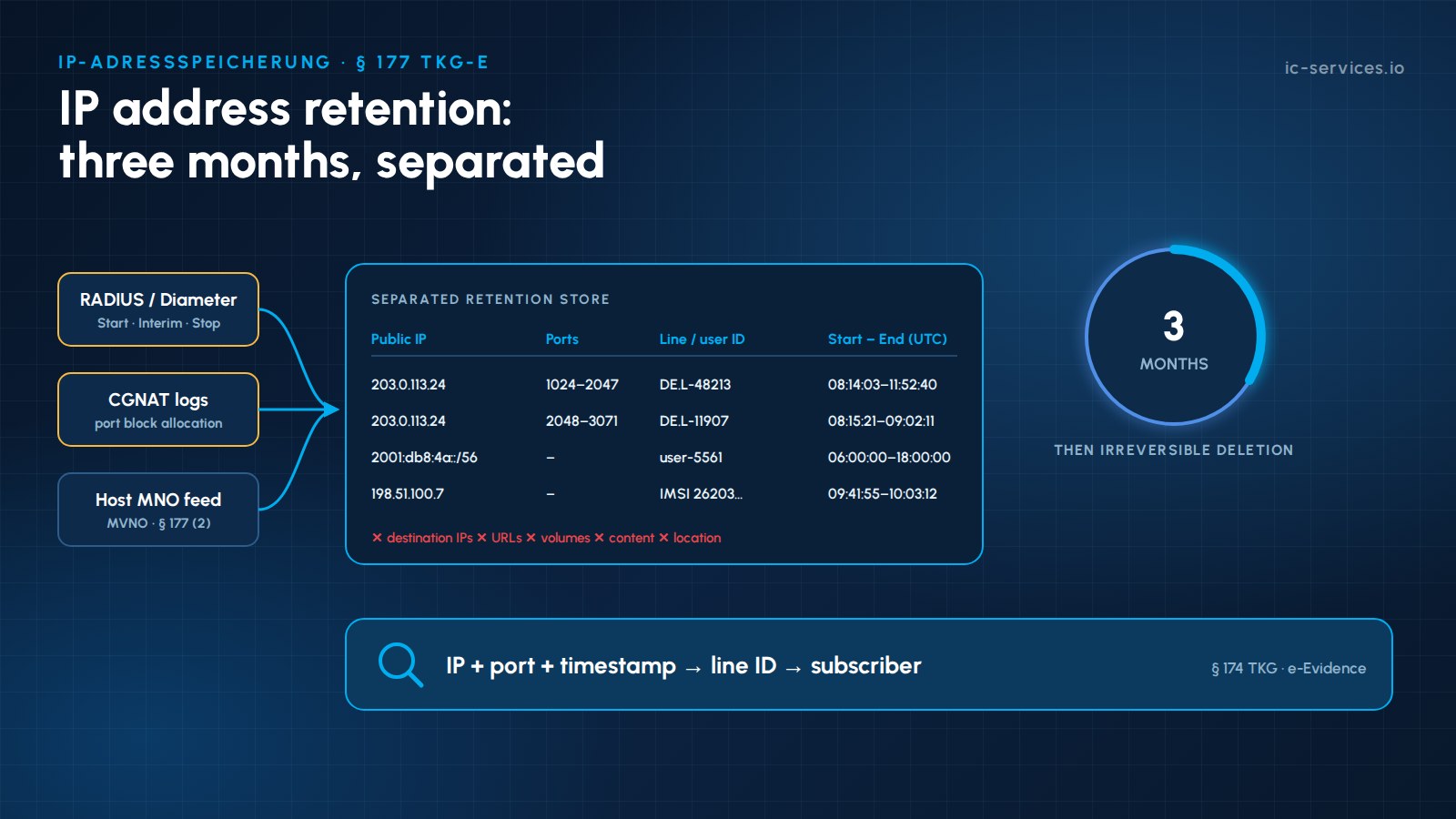
TKG-E 제177조에 따라, 인터넷 접속 서비스 제공자는 다음 사항을 3개월 동안 보관해야 합니다:
- 그 공용 IP 주소, 또는 IPv6의 경우 할당된 접두사,
- 포트 번호 출처 표기가 필요한 경우, 예를 들어 캐리어급 NAT(CGNAT) 뒤에서,
- 그 라인 식별자 및 사용자 식별자,
- 시작과 끝 각 과제의 시간을, 시간대까지 포함하여 초 단위까지 정확히 표시합니다.
해당 데이터는 별도의 저장소에 보관되어야 합니다. 이 데이터는 TKG 제174조에 따른 가입자 신원 확인 및 전자증거(e-Evidence) 관련 가입자 요청 시에만 사용될 수 있습니다. 서비스 제공업체는 법 시행 후 6개월 이내에 이를 준수해야 합니다.
RADIUS 계정 정보는 대부분의 항목을 포함하지만 CGNAT 포트 매핑은 포함하지 않으므로, NAT 로깅이 필요합니다. MVNO 및 리셀러는 호스트 네트워크에서 IP 주소를 할당하는 경우에도 데이터 저장을 보장해야 합니다(TKG-E 제177조 제2항). 이는 계약을 통해 또는 데이터 피드를 통해 수행할 수 있으며, 요청 시 BNetzA에 데이터 저장 주체를 명시해야 합니다.
지정된 IP 주소 보관소
ICS는 귀하가 BNetzA에 지정한 저장 주체로써 보존 저장소를 운영할 수 있습니다.
1
격차 분석
ICS는 RADIUS, 패킷 코어 및 CGNAT 로깅이 § 177 TKG-E를 준수하는지 확인합니다.
2
데이터 피드
커넥터는 AAA 시스템, 게이트웨이, NAT 장치 또는 호스트 네트워크에서 데이터를 수집합니다.
3
분리된 매장
암호화된 저장소는 필수 필드만 보관하고, 나머지는 자동으로 삭제합니다.
4
조회
IP 주소, 포트 및 시간을 통해 회선을 파악한 다음, 가입자를 식별합니다.
5
요청에 대한 답변
응답은 ESB 또는 E-Mail-ESB를 통해 전송됩니다.
6
문서
ICS는 BNetzA 제출 서류를 작성하고 감사에 협력합니다.
데이터 보존 수단 비교
| 측면 | 구독자 데이터 요청 | 급속 냉동 | IP 주소 보존 |
|---|---|---|---|
| 법적 근거 | § 174 TKG | § 176 TKG-E (예정) | § 177 TKG-E (예정) |
| 트리거 | 개별 요청 | 개별 주문 | 없음, 모든 연결에 적용됨 |
| 의무 당사자 | 가입자 데이터를 보유한 사업자 | 공공 통신 서비스 및 참여자(약 3,000명) | 인터넷 접속 제공업체(약 700곳) |
| 데이터 | 이름, 주소 등 가입자 정보 | 위치 및 셀 데이터를 포함한 트래픽 데이터(콘텐츠 제외) | 공용 IP 또는 접두사, 포트, 회선 및 사용자 ID, 타임스탬프 |
| 기간 | 기존 기록을 바탕으로 답변함 | 최대 3개월, 여기에 법원 명령에 따라 최대 3개월이 추가될 수 있음 | 3개월 |
| 공시 | 권한을 부여받은 기관의 요청에 따라 | 별도의 요청이 있을 경우에만 | 구독자 식별 및 전자 증거 용도로만 사용됩니다. |
| ICS 서비스 | 구독자 데이터 웨어하우스 | 급속 냉동 서비스 | 지정 보존 저장소 |
인계 기준 및 전자 증거
보관된 데이터는 ETSI TS 102 657에 따라 인계될 수 있습니다. 독일의 요청은 ESB 및 E-Mail-ESB 채널을 사용합니다. 전자증거규정(e-Evidence Regulation)에 따라, 유럽 보존 명령(European Preservation Order)은 60일간의 보존을 요구하며, 이는 30일 연장될 수 있습니다. 당사의 전자 증거 규정 준수 플랫폼 국내 요청과 함께 이러한 주문도 처리합니다.
왜 ICS인가
01
20년 이상의 경험
ICS는 20년 넘게 통신, 합법적 감청 및 규정 준수 분야에서 활동해 왔습니다.
02
BNetzA의 여러 건의 승인
ICS 감청 솔루션은 독일 연방 네트워크청의 여러 가지 승인 절차를 통과했습니다.
03
보안 심사를 통과한 직원
저희 팀은 독일 연방 내무부로부터 보안 승인을 받았으며, 기밀 정보를 취급할 수 있습니다.
04
모든 요청 유형을 한곳에서 확인하세요
가입자 요청, 긴급 동결, IP 주소 보존 및 전자 증거는 하나의 프로세스와 하나의 감사 추적을 통해 처리됩니다.
자주 묻는 질문
독일이 일반 데이터 보존 제도를 다시 도입하고 있는 것일까?
이전 형태로는 아닙니다. 독일의 기존 데이터 보존 규정은 2017년부터 시행되지 않았으며, 유럽연합 사법재판소(CJEU)는 2022년에 해당 규정이 EU 법과 양립할 수 없다고 판결했습니다. 대신 정부가 제출한 법안(BT-Drs. 21/6581)은 일반적인 데이터 보관을 IP 주소 할당 정보에 한해 3개월로 제한하고, 표적형 신속 동결 절차를 추가하고 있다. 이 법안은 현재 의회에서 심의 중이다.
‘급속 냉동’이란 무엇인가요?
‘긴급 동결’이란 당국이 통신 사업자에게 특정 인물이나 장소에 관한 기존 통신 데이터를 지체 없이 보존하도록 명령하는 절차를 말합니다. 초안(형사소송법(StPO) 제100g조, 통신법(TKG-E) 제176조)에 따르면, 이 명령의 유효 기간은 최대 3개월이며, 법원은 이를 최대 3개월까지 연장할 수 있습니다. 해당 데이터는 별도의 요청이 있을 경우에만 공개될 수 있으며, 그렇지 않은 경우에는 삭제되어야 한다.
TKG-E 제177조에 따라 누가 IP 주소를 보관해야 합니까?
이 초안에 따르면 약 700개사로 추산되는 인터넷 접속 서비스 제공업체. 메신저 및 이메일 서비스와 호텔 Wi-Fi와 같은 지역 Wi-Fi 핫스팟은 이 의무의 적용 대상이 아닙니다. 자체 고객 기반을 보유한 MVNO 및 리셀러는 적용 대상에 포함됩니다. 호스트 네트워크가 IP 주소를 할당하는 경우, 해당 업체는 계약 또는 데이터 피드를 통해 저장 조치를 보장해야 합니다.
IP 주소 보존을 위해서는 RADIUS 계정 관리만으로도 충분한가요?
RADIUS 계정 정보에는 할당된 IP 주소, 식별자 및 타임스탬프가 포함됩니다. 그러나 캐리어급 NAT(CGNAT) 환경에서는 포트 매핑이 AAA 시스템이 아닌 NAT 게이트웨이에서 생성됩니다. 따라서 CGNAT를 사용하는 서비스 제공업체는 NAT 로깅도 필요합니다. ICS는 격차 분석을 통해 귀사의 로깅 상태를 점검하고, 마감일 전에 해당 격차를 해소해 드립니다.
ICS가 당사를 대신하여 동결되거나 보류된 데이터를 저장할 수 있습니까?
네. ‘급속 동결’ 초안은 통신 서비스 제공에 참여하는 주체를 명시적으로 포함하고 있으며, TKG-E 제177조 제2항은 다른 주체에 의한 저장 행위를 허용하고 있습니다. ICS는 귀하의 서비스 제공자 역할을 수행할 수 있으며, BNetzA에 저장 주체로 등록될 수 있습니다. 귀하는 여전히 의무를 지는 당사자로 남으며, ICS가 저장, 공개 및 삭제를 처리합니다.
구독형 데이터 웨어하우스는 우리 데이터를 클라우드로 옮기나요?
아닙니다. Subscriber Data Warehouse는 클라우드에 의존하지 않고 고객사의 자체 인프라에 배포되므로, 데이터가 고객사의 네트워크를 벗어나는 일은 절대 없습니다. 이 솔루션은 오픈소스 구성 요소를 사용하며, 모든 검색 내역을 기록하고, 데이터에 대한 완전한 소유권을 고객사에게 부여합니다. 맞춤형 ETL 파이프라인을 통해 청구, 프로비저닝, CRM 및 레거시 시스템에서 데이터를 마이그레이션할 필요 없이 추출합니다.
6개월은 순식간에 지나간다
TKG-E 제177조가 발효되면, 인터넷 접속 제공업체들은 6개월 이내에 관련 규정을 준수해야 합니다. 지금 바로 ICS와 함께 준비 현황 평가를 시작하세요.