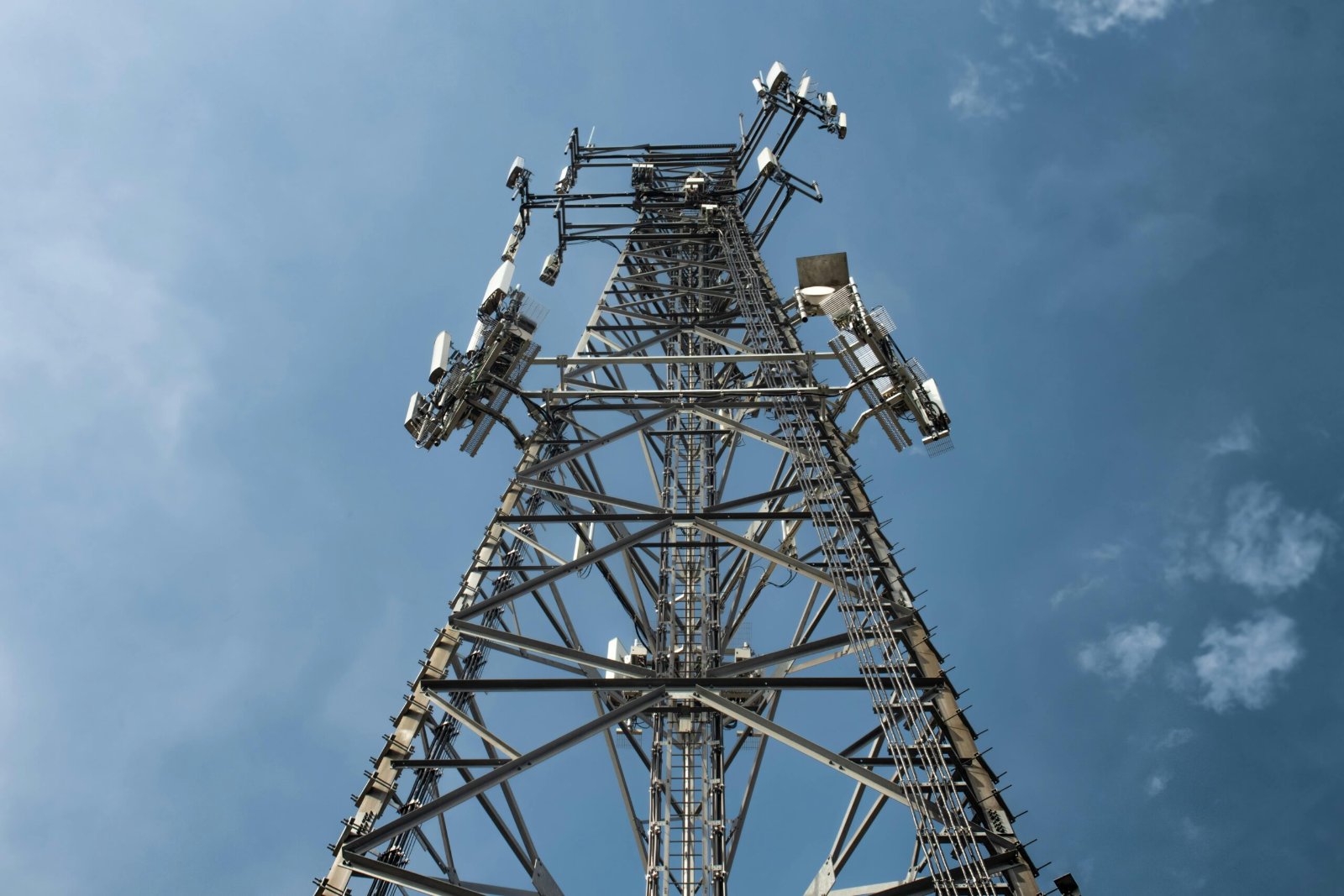
Network slicing 5G technology creates both challenges and opportunities for lawful interception compliance. Network slicing is one of the defining capabilities of 5G Standalone (SA) architecture. By creating logically isolated network partitions on shared physical infrastructure, operators can tailor connectivity characteristics — latency, bandwidth, reliability, and security — to the specific requirements of different services, applications, or customer groups. For lawful interception, network slicing introduces both significant complications and, paradoxically, potential simplifications. Understanding how slicing affects LI targeting, execution, and delivery is essential for any operator deploying or planning a 5G SA network.
This article examines the intersection of network slicing and lawful interception, covering the technical architecture, the challenges for target identification and interception execution, the potential benefits that slicing can offer for LI operations, and the practical steps operators should take to ensure compliance in a sliced network environment.
How Network Slicing 5G Affects LI
In a 5G SA network, a network slice is a logically isolated end-to-end network that includes specific configurations of radio access, transport, and core network resources. Each slice is identified by a Single Network Slice Selection Assistance Information (S-NSSAI) value and is designed to meet particular service requirements. For example, one slice might be optimised for ultra-reliable low-latency communication (URLLC) for industrial control, another for massive IoT (MIoT) sensor networks, and a third might provide enhanced mobile broadband (eMBB) for consumer smartphones.
From a core network perspective, each slice may have its own dedicated instances of certain network functions — such as the SMF, UPF, and PCF — or may share network function instances with other slices. The degree of isolation between slices is configurable and depends on the operator’s deployment strategy and the requirements of the slice. This flexibility is a key advantage of slicing but also introduces complexity for functions that need to operate across slice boundaries, including lawful interception.
A single subscriber may simultaneously use services across multiple slices. A smartphone user might have their voice traffic routed through one slice, their video streaming through another, and their IoT companion device connected through a third. Each slice may have its own UPF, its own PDU session, and its own IP addressing. Which slice carries which traffic is decided by the device’s route selection policy (URSP), within the slices the network allows, selected with the help of the NSSF and the subscription data in the UDM.
Complications for LI Targeting
Network slicing complicates LI targeting in several ways. The most fundamental complication is that a target’s traffic may be spread across multiple slices, each potentially served by different UPF instances. A single interception order must result in the capture of all the target’s communications, regardless of which slice they traverse. This requires the operator to equip every network function that can serve the target, including dedicated per-slice SMFs and UPFs, with LI functions, and to provision the task to all of them.
Target identification in a sliced environment is more complex than in a non-sliced network. The same subscriber may appear with different session contexts, different IP addresses, and different QoS characteristics depending on which slice is serving a particular communication flow. Every interception point tags its X2/X3 records with the task’s XID, so the mediation function delivers every session in every slice under the same LIID, and the IRI tells the LEA which slice (S-NSSAI) each session used.
The dynamic nature of slice allocation adds further complexity. Slices can be created, modified, and terminated dynamically, and a target’s traffic may move between slices as service requirements change. If the task was provisioned only to the network functions of some slices, a change in the target’s subscribed slices (which the UDM reports as IRI) can leave a gap, and the administration function must extend the task to the SMFs of the new slices. Provisioning every SMF that can serve the target avoids this, because UPF interception is then triggered per session.
Another complication arises from the potential for different slices to be operated by different entities. In some business models, an enterprise or vertical industry partner may operate its own slice on the operator’s infrastructure, potentially with its own network functions and operational management. The question of who is responsible for lawful interception within such a slice — the infrastructure operator, the slice tenant, or both — is a regulatory and contractual question. In most frameworks the answer follows the service: whoever provides a publicly available communications service over the slice carries the LI obligation. A private enterprise slice that is not offered to the public is usually out of scope, and the infrastructure operator remains responsible for the parts of its network that serve public services. Contracts must reflect this, and the operator must keep its LI functions secure even in slices it does not manage.
How Slicing Can Simplify LI
Despite these complications, network slicing can also offer potential benefits for lawful interception. The logical isolation of slices means that traffic within a slice is already segregated from traffic in other slices. If the target can only use certain slices, the administration function can provision the task only to the network functions of those slices (3GPP TS 33.127, clause 5.3.5.5), which keeps the number of provisioned interception points small.
Slicing can also enable more granular interception. Instead of intercepting all of a target’s traffic — which in a modern smartphone environment can include significant volumes of background data, software updates, and other non-relevant traffic — slicing could potentially allow the interception to be focused on specific service types or communication flows. In practice, however, limiting interception to particular slices is generally not an option: national rules such as § 5(2) TKÜV in Germany require a complete copy of the target’s communications. Where an order covers only certain services, the standards provide service scoping by service type, not by slice.
From a security perspective, the isolation between slices can provide additional protection for the LI function. By deploying LI components within a dedicated, secure slice — or by ensuring that LI traffic between network functions and the mediation platform is carried on a separate, isolated transport path — operators can enhance the confidentiality and integrity of the interception process. Slice isolation can help, but LI functions still need their own protected trust domain. In virtualised networks 3GPP requires them to meet ETSI GS NFV-SEC 012 (TS 33.126, R6.6-160).
3GPP Standards for LI in Sliced Networks
The 3GPP LI architecture for 5G, defined in TS 33.127 and TS 33.128, addresses network slicing explicitly. 3GPP’s LI requirements (TS 33.126) are technology-neutral: interception must be complete regardless of how the network is built, and that includes slicing. TS 33.127 and TS 33.128 add slice-aware provisioning and report slice information (S-NSSAI) in the IRI. On X1, a task names the target and, optionally, the service types to intercept. Slices are not an X1 parameter. Instead, the administration function decides which network functions, and therefore which slices, receive the task (3GPP TS 33.127, clause 5.3.5.5), and the X2 and X3 interfaces carry xIRI and xCC from interception points in any slice to the MDF, which turns them into IRI and CC for delivery.
The standards define that the AMF, which handles the target’s registration and mobility management, is a key interception point for slice-related IRI. When a target registers with the network and is allocated to one or more slices, the AMF generates IRI events that include the slice information. CC interception in the UPF is triggered per PDU session: the SMF serving that session, which holds the LI task, instructs its UPF over the internal LI_T3 interface. The operator must therefore make sure every SMF that can serve the target, in every slice, carries the task and that every UPF supports LI_T3 and X3.
The UDM is itself an interception point: it reports changes to the target’s subscribed slices as IRI. To keep coverage complete as slices change, the LI administration function learns about new SMFs and UPFs from the operator’s management and orchestration systems when they are instantiated, and from the System Information Retrieval Function (SIRF) in the NRF when they register and are ready for traffic (3GPP TS 33.127, clauses 5.3.5.3 and 5.3.6).
Practical Implications for Operators
Operators deploying 5G SA networks with slicing capabilities should address LI requirements from the earliest stages of slice design and deployment. Several practical steps are recommended. First, ensure that your LI system is aware of the slice architecture and can dynamically discover and configure interception points within any slice. This requires integration between the LI administration function and the operator’s orchestration systems and the NRF-based System Information Retrieval Function (SIRF), so that new SMFs and UPFs are provisioned as they are created.
Second, verify that the UPFs deployed within each slice support the LI_T3 trigger and the X3 interface for content delivery to the LI mediation function, and that the SMFs serving those slices support the IRI point of interception and the CC triggering function. If a slice uses a UPF that does not support X3, the operator will have a gap in its interception capability for traffic traversing that slice. This is a procurement requirement that should be included in all UPF vendor specifications.
Third, develop procedures for handling interception orders that span multiple slices. The LI operations team must understand how to provision tasks that cover all of a target’s slice allocations and when the administration function has to extend a task to the network functions of additional slices. Automation of this process is highly recommended, as manual configuration across multiple slices is error-prone and slow.
Fourth, address the governance and contractual dimensions of LI in shared or enterprise-operated slices. If third parties operate slices on your infrastructure, the responsibilities for lawful interception must be clearly defined in the commercial agreements and must align with the regulatory requirements of each relevant jurisdiction.
Conclusion
Network slicing in 5G SA introduces both challenges and opportunities for lawful interception. The distribution of a target’s traffic across multiple slices, the dynamic nature of slice allocation, and the potential for third-party slice operation all complicate the interception process. At the same time, the logical isolation and granularity of slicing can offer new approaches to targeted, efficient interception. For operators, the key is to address LI requirements proactively in slice design, to ensure that their LI systems are slice-aware and dynamically adaptable, and to establish clear governance for interception responsibilities in multi-tenant slice environments. By doing so, operators can meet their compliance obligations while leveraging the full potential of 5G network slicing.
Looking ahead, the evolution of network slicing toward more dynamic, intent-based models will further increase the complexity of LI in sliced environments. Future networks may feature slices that are created and destroyed on demand, with resources allocated and released in real time based on service demands. The LI system must evolve alongside these capabilities, maintaining comprehensive interception coverage even as the underlying network topology changes continuously. Operators that invest in flexible, standards-compliant LI solutions today will be better prepared to adapt to these future developments and to maintain uninterrupted compliance as their 5G networks mature.
As network slicing 5G deployments mature, the interception challenges will evolve. Operators should design their network slicing 5G LI architecture with future scalability in mind.
Related Articles
For further reading on related topics, explore these articles:
- X1/X2/X3 Interfaces in 5G: The 3GPP LI Architecture Explained
- eSIM and Lawful Interception: What the RSP Architecture Means for Compliance
- Encrypted DNS (DoH/DoT) and Its Impact on Lawful Interception Capabilities
External Resources
The following external resources provide additional context and official documentation: