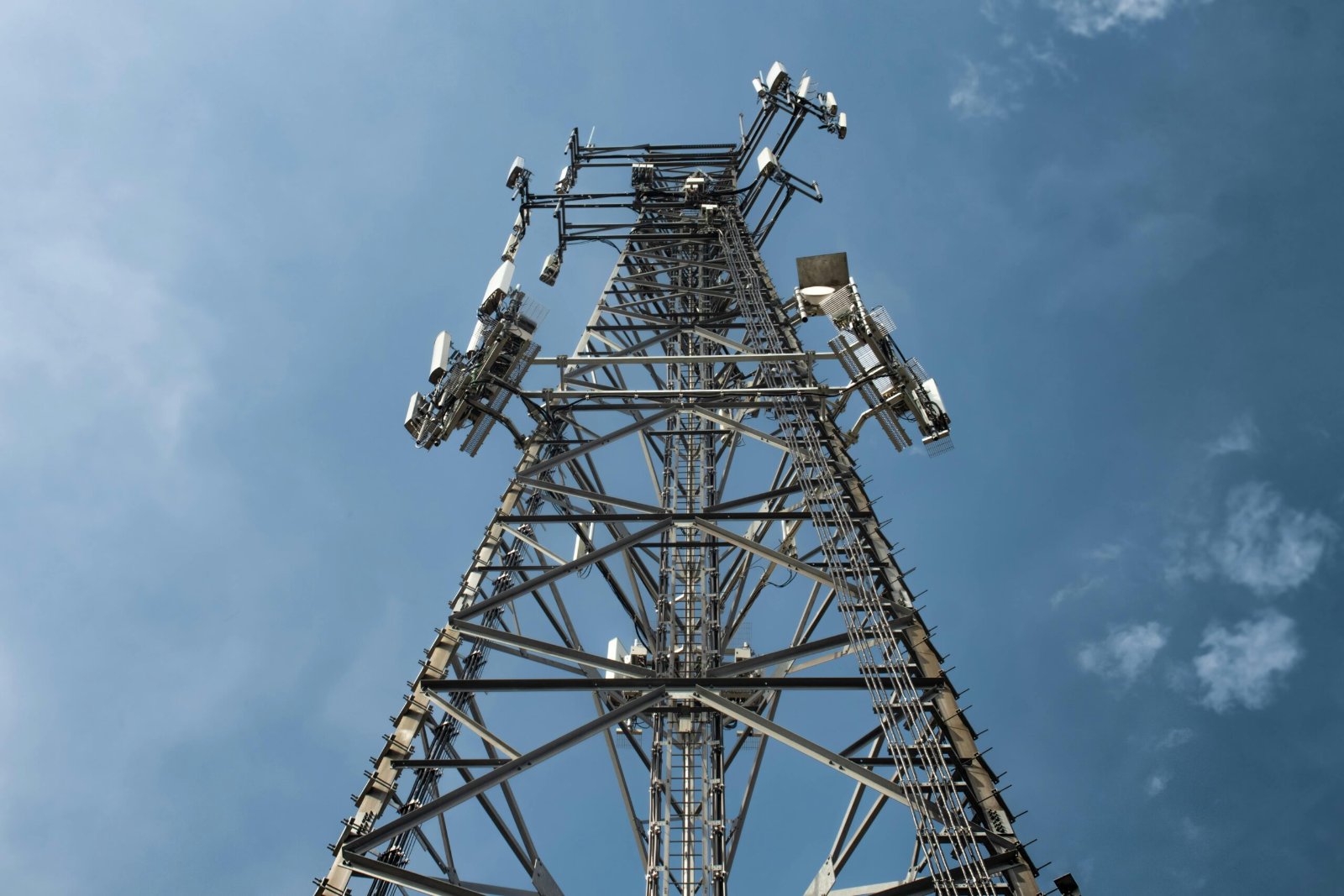
Die 5G-Technologie „Network Slicing“ bringt sowohl Herausforderungen als auch Chancen für die Einhaltung der TKÜ-Vorschriften mit sich. Network Slicing ist eine der charakteristischen Funktionen der 5G-Standalone-Architektur (SA). Durch die Schaffung logisch isolierter Netzwerkpartitionen auf einer gemeinsam genutzten physischen Infrastruktur können Betreiber die Konnektivitätsmerkmale – Latenz, Bandbreite, Zuverlässigkeit und Sicherheit – auf die spezifischen Anforderungen verschiedener Dienste, Anwendungen oder Kundengruppen zuschneiden. Für die Telekommunikationsüberwachung bringt Network Slicing sowohl erhebliche Komplikationen als auch – paradoxerweise – potenzielle Vereinfachungen mit sich. Das Verständnis darüber, wie sich Network Slicing auf die Zielauswahl, Durchführung und Umsetzung der Überwachung auswirkt, ist für jeden Netzbetreiber, der ein 5G-SA-Netzwerk einführt oder plant, von entscheidender Bedeutung.
Dieser Artikel befasst sich mit den Schnittstellen zwischen Network Slicing und der Telekommunikationsüberwachung und behandelt dabei die technische Architektur, die Herausforderungen bei der Identifizierung der Zielobjekte und der Durchführung der Überwachung sowie die potenziellen Vorteile, die das Slicing für LI-Vorgänge, sowie die praktischen Maßnahmen, die Betreiber ergreifen sollten, um die Einhaltung der Vorschriften in einer in Segmente unterteilten Netzwerkumgebung sicherzustellen.
Wie sich 5G-Network-Slicing auf LI auswirkt
In a 5G SA network, a network slice is a logically isolated end-to-end network that includes specific configurations of radio access, transport, and core network resources. Each slice is identified by a Single Network Slice Selection Assistance Information (S-NSSAI) value and is designed to meet particular service requirements. For example, one slice might be optimised for ultra-reliable low-latency communication (URLLC) for industrial control, another for massive IoT (MIoT) sensor networks, and a third might provide enhanced mobile broadband (eMBB) for consumer smartphones.
Aus Sicht des Kernnetzes kann jedes Slice über eigene, dedizierte Instanzen bestimmter Netzwerkfunktionen verfügen – wie beispielsweise SMF, UPF und PCF – oder sich Netzwerkfunktionsinstanzen mit anderen Slices teilen. Der Grad der Isolation zwischen den Slices ist konfigurierbar und hängt von der Bereitstellungsstrategie des Betreibers sowie den Anforderungen des jeweiligen Slices ab. Diese Flexibilität ist ein wesentlicher Vorteil des Slicing, führt jedoch auch zu einer erhöhten Komplexität bei Funktionen, die über Slice-Grenzen hinweg arbeiten müssen, darunter auch die Telekommunikationsüberwachung.
A single subscriber may simultaneously use services across multiple slices. A smartphone user might have their voice traffic routed through one slice, their video streaming through another, and their IoT companion device connected through a third. Each slice may have its own UPF, its own PDU session, and its own IP addressing. Which slice carries which traffic is decided by the device’s route selection policy (URSP), within the slices the network allows, selected with the help of the NSSF and the subscription data in the UDM.
Komplikationen bei der LI-Zielausrichtung
Network slicing complicates LI targeting in several ways. The most fundamental complication is that a target’s traffic may be spread across multiple slices, each potentially served by different UPF instances. A single interception order must result in the capture of all the target’s communications, regardless of which slice they traverse. This requires the operator to equip every network function that can serve the target, including dedicated per-slice SMFs and UPFs, with LI functions, and to provision the task to all of them.
Target identification in a sliced environment is more complex than in a non-sliced network. The same subscriber may appear with different session contexts, different IP addresses, and different QoS characteristics depending on which slice is serving a particular communication flow. Every interception point tags its X2/X3 records with the task’s XID, so the mediation function delivers every session in every slice under the same LIID, and the IRI tells the LEA which slice (S-NSSAI) each session used.
The dynamic nature of slice allocation adds further complexity. Slices can be created, modified, and terminated dynamically, and a target’s traffic may move between slices as service requirements change. If the task was provisioned only to the network functions of some slices, a change in the target’s subscribed slices (which the UDM reports as IRI) can leave a gap, and the administration function must extend the task to the SMFs of the new slices. Provisioning every SMF that can serve the target avoids this, because UPF interception is then triggered per session.
Another complication arises from the potential for different slices to be operated by different entities. In some business models, an enterprise or vertical industry partner may operate its own slice on the operator’s infrastructure, potentially with its own network functions and operational management. The question of who is responsible for lawful interception within such a slice — the infrastructure operator, the slice tenant, or both — is a regulatory and contractual question. In most frameworks the answer follows the service: whoever provides a publicly available communications service over the slice carries the LI obligation. A private enterprise slice that is not offered to the public is usually out of scope, and the infrastructure operator remains responsible for the parts of its network that serve public services. Contracts must reflect this, and the operator must keep its LI functions secure even in slices it does not manage.
Wie das Aufteilen die LI vereinfachen kann
Despite these complications, network slicing can also offer potential benefits for lawful interception. The logical isolation of slices means that traffic within a slice is already segregated from traffic in other slices. If the target can only use certain slices, the administration function can provision the task only to the network functions of those slices (3GPP TS 33.127, clause 5.3.5.5), which keeps the number of provisioned interception points small.
Slicing can also enable more granular interception. Instead of intercepting all of a target’s traffic — which in a modern smartphone environment can include significant volumes of background data, software updates, and other non-relevant traffic — slicing could potentially allow the interception to be focused on specific service types or communication flows. In practice, however, limiting interception to particular slices is generally not an option: national rules such as § 5(2) TKÜV in Germany require a complete copy of the target’s communications. Where an order covers only certain services, the standards provide service scoping by service type, not by slice.
Aus Sicherheitssicht kann die Isolierung zwischen den Slices zusätzlichen Schutz für die LI-Funktion bieten. Durch die Bereitstellung von LI-Komponenten in einem dedizierten, sicheren Slice – oder durch die Sicherstellung, dass der LI-Datenverkehr zwischen Netzwerkfunktionen und dem Mediationsplattform is carried on a separate, isolated transport path — operators can enhance the confidentiality and integrity of the interception process. Slice isolation can help, but LI functions still need their own protected trust domain. In virtualised networks 3GPP requires them to meet ETSI GS NFV-SEC 012 (TS 33.126, R6.6-160).
3GPP-Standards für LI in Sliced-Netzwerken
The 3GPP LI architecture for 5G, defined in TS 33.127 and TS 33.128, addresses network slicing explicitly. 3GPP’s LI requirements (TS 33.126) are technology-neutral: interception must be complete regardless of how the network is built, and that includes slicing. TS 33.127 and TS 33.128 add slice-aware provisioning and report slice information (S-NSSAI) in the IRI. On X1, a task names the target and, optionally, the service types to intercept. Slices are not an X1 parameter. Instead, the administration function decides which network functions, and therefore which slices, receive the task (3GPP TS 33.127, clause 5.3.5.5), and the X2 and X3 interfaces carry xIRI and xCC from interception points in any slice to the MDF, which turns them into IRI and CC for delivery.
The standards define that the AMF, which handles the target’s registration and mobility management, is a key interception point for slice-related IRI. When a target registers with the network and is allocated to one or more slices, the AMF generates IRI events that include the slice information. CC interception in the UPF is triggered per PDU session: the SMF serving that session, which holds the LI task, instructs its UPF over the internal LI_T3 interface. The operator must therefore make sure every SMF that can serve the target, in every slice, carries the task and that every UPF supports LI_T3 and X3.
The UDM is itself an interception point: it reports changes to the target’s subscribed slices as IRI. To keep coverage complete as slices change, the LI administration function learns about new SMFs and UPFs from the operator’s management and orchestration systems when they are instantiated, and from the System Information Retrieval Function (SIRF) in the NRF when they register and are ready for traffic (3GPP TS 33.127, clauses 5.3.5.3 and 5.3.6).
Praktische Auswirkungen für die Betreiber
Operators deploying 5G SA networks with slicing capabilities should address LI requirements from the earliest stages of slice design and deployment. Several practical steps are recommended. First, ensure that your LI system is aware of the slice architecture and can dynamically discover and configure interception points within any slice. This requires integration between the LI administration function and the operator’s orchestration systems and the NRF-based System Information Retrieval Function (SIRF), so that new SMFs and UPFs are provisioned as they are created.
Second, verify that the UPFs deployed within each slice support the LI_T3 trigger and the X3 interface for content delivery to the LI mediation function, and that the SMFs serving those slices support the IRI point of interception and the CC triggering function. If a slice uses a UPF that does not support X3, the operator will have a gap in its interception capability for traffic traversing that slice. This is a procurement requirement that should be included in all UPF vendor specifications.
Third, develop procedures for handling interception orders that span multiple slices. The LI operations team must understand how to provision tasks that cover all of a target’s slice allocations and when the administration function has to extend a task to the network functions of additional slices. Automation of this process is highly recommended, as manual configuration across multiple slices is error-prone and slow.
Viertens sollten die Governance- und vertraglichen Aspekte von LI in gemeinsam genutzten oder vom Unternehmen betriebenen Slices geregelt werden. Wenn Dritte Slices auf Ihrer Infrastruktur betreiben, müssen die Zuständigkeiten für die Telekommunikationsüberwachung in den kommerziellen Vereinbarungen klar definiert sein und mit den regulatorischen Anforderungen der jeweiligen Rechtsordnung im Einklang stehen.
Schlussfolgerung
Das Network Slicing im 5G-SA-Modus bringt sowohl Herausforderungen als auch Chancen für die Telekommunikationsüberwachung mit sich. Die Verteilung des Datenverkehrs einer Zielperson auf mehrere Slices, die Dynamik der Slice-Zuweisung und die Möglichkeit des Slice-Betriebs durch Dritte erschweren den Überwachungsprozess. Gleichzeitig können die logische Isolation und die Granularität des Slicing neue Ansätze für eine gezielte und effiziente Überwachung bieten. Für Netzbetreiber ist es entscheidend, die Anforderungen an die Telekommunikationsüberwachung bereits bei der Slicing-Planung proaktiv zu berücksichtigen, sicherzustellen, dass ihre Überwachungssysteme „slice-aware“ und dynamisch anpassungsfähig sind, sowie klare Regeln für die Zuständigkeiten bei der Überwachung in Multi-Tenant-Slicing-Umgebungen festzulegen. Auf diese Weise können Netzbetreiber ihre Compliance-Verpflichtungen erfüllen und gleichzeitig das volle Potenzial des 5G-Network-Slicing ausschöpfen.
Mit Blick auf die Zukunft wird die Weiterentwicklung des Network Slicing hin zu dynamischeren, absichtsbasierten Modellen die Komplexität der LI in Slicing-Umgebungen weiter erhöhen. Zukünftige Netzwerke könnten Slices aufweisen, die bedarfsgerecht erstellt und aufgelöst werden, wobei Ressourcen in Echtzeit entsprechend den Dienstanforderungen zugewiesen und freigegeben werden. Das LI-System muss sich parallel zu diesen Funktionen weiterentwickeln und eine umfassende Überwachungsabdeckung gewährleisten, selbst wenn sich die zugrunde liegende Netzwerktopologie ständig ändert. Netzbetreiber, die in flexible, standardkonforme LI-Lösungen … werden heute besser darauf vorbereitet sein, sich an diese zukünftigen Entwicklungen anzupassen und auch im Zuge der Weiterentwicklung ihrer 5G-Netze die Compliance lückenlos aufrechtzuerhalten.
Mit zunehmender Reife der 5G-Netzwerk-Slicing-Implementierungen werden sich auch die Herausforderungen im Bereich der Überwachung weiterentwickeln. Netzbetreiber sollten ihre 5G-LI-Architektur für Netzwerk-Slicing unter Berücksichtigung der zukünftigen Skalierbarkeit konzipieren.
Verwandte Artikel
Weitere Informationen zu verwandten Themen finden Sie in diesen Artikeln:
- X1/X2/X3-Schnittstellen in 5G: Die 3GPP LI-Architektur wird erklärt
- eSIM und Telekommunikationsüberwachung (TKÜ): Was die RSP-Architektur für die Einhaltung der Vorschriften bedeutet
- Verschlüsseltes DNS (DoH/DoT) und seine Auswirkungen auf legale Überwachungsfähigkeiten
Externe Ressourcen
Die folgenden externen Quellen bieten zusätzlichen Kontext und offizielle Dokumentation: