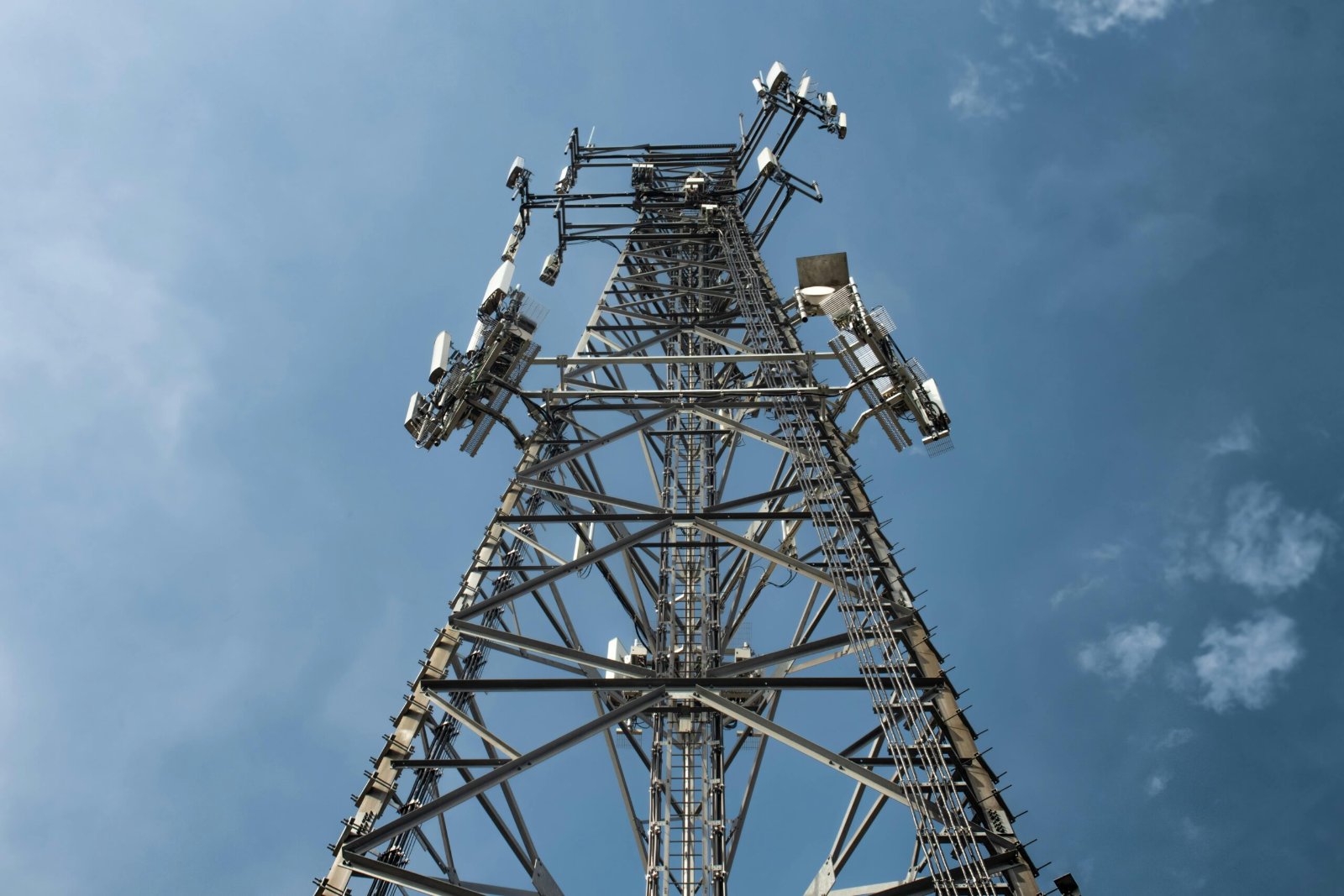
La tecnologia 5G di “network slicing” comporta sia sfide che opportunità per la conformità alle norme in materia di intercettazioni legali. Il network slicing è una delle funzionalità distintive dell’architettura 5G Standalone (SA). Creando partizioni di rete logicamente isolate su un’infrastruttura fisica condivisa, gli operatori possono adattare le caratteristiche di connettività — latenza, larghezza di banda, affidabilità e sicurezza — alle esigenze specifiche di diversi servizi, applicazioni o gruppi di clienti. Per quanto riguarda l’intercettazione legale, il network slicing introduce sia notevoli complicazioni sia, paradossalmente, potenziali semplificazioni. Comprendere in che modo il network slicing influisca sull’individuazione degli obiettivi, sull’esecuzione e sulla realizzazione dell’intercettazione legale è essenziale per qualsiasi operatore che stia implementando o pianificando una rete 5G SA.
Questo articolo esamina l'intersezione tra il network slicing e l'intercettazione legale, trattando l'architettura tecnica, le sfide relative all'identificazione dei bersagli e all'esecuzione dell'intercettazione, nonché i potenziali vantaggi che il network slicing può offrire per Operazioni LI, nonché le misure concrete che gli operatori dovrebbero adottare per garantire la conformità in un ambiente di rete frazionato.
In che modo il network slicing del 5G influisce sulla LI
In a 5G SA network, a network slice is a logically isolated end-to-end network that includes specific configurations of radio access, transport, and core network resources. Each slice is identified by a Single Network Slice Selection Assistance Information (S-NSSAI) value and is designed to meet particular service requirements. For example, one slice might be optimised for ultra-reliable low-latency communication (URLLC) for industrial control, another for massive IoT (MIoT) sensor networks, and a third might provide enhanced mobile broadband (eMBB) for consumer smartphones.
Dal punto di vista della rete centrale, ogni slice può disporre di istanze dedicate di determinate funzioni di rete — quali SMF, UPF e PCF — oppure può condividere le istanze delle funzioni di rete con altre slice. Il grado di isolamento tra le slice è configurabile e dipende dalla strategia di implementazione dell’operatore e dai requisiti della slice. Questa flessibilità rappresenta un vantaggio fondamentale del slicing, ma introduce anche una certa complessità per le funzioni che devono operare oltre i confini delle singole slice, tra cui l’intercettazione legale.
A single subscriber may simultaneously use services across multiple slices. A smartphone user might have their voice traffic routed through one slice, their video streaming through another, and their IoT companion device connected through a third. Each slice may have its own UPF, its own PDU session, and its own IP addressing. Which slice carries which traffic is decided by the device’s route selection policy (URSP), within the slices the network allows, selected with the help of the NSSF and the subscription data in the UDM.
Complicazioni legate al targeting del LI
Network slicing complicates LI targeting in several ways. The most fundamental complication is that a target’s traffic may be spread across multiple slices, each potentially served by different UPF instances. A single interception order must result in the capture of all the target’s communications, regardless of which slice they traverse. This requires the operator to equip every network function that can serve the target, including dedicated per-slice SMFs and UPFs, with LI functions, and to provision the task to all of them.
Target identification in a sliced environment is more complex than in a non-sliced network. The same subscriber may appear with different session contexts, different IP addresses, and different QoS characteristics depending on which slice is serving a particular communication flow. Every interception point tags its X2/X3 records with the task’s XID, so the mediation function delivers every session in every slice under the same LIID, and the IRI tells the LEA which slice (S-NSSAI) each session used.
The dynamic nature of slice allocation adds further complexity. Slices can be created, modified, and terminated dynamically, and a target’s traffic may move between slices as service requirements change. If the task was provisioned only to the network functions of some slices, a change in the target’s subscribed slices (which the UDM reports as IRI) can leave a gap, and the administration function must extend the task to the SMFs of the new slices. Provisioning every SMF that can serve the target avoids this, because UPF interception is then triggered per session.
Another complication arises from the potential for different slices to be operated by different entities. In some business models, an enterprise or vertical industry partner may operate its own slice on the operator’s infrastructure, potentially with its own network functions and operational management. The question of who is responsible for lawful interception within such a slice — the infrastructure operator, the slice tenant, or both — is a regulatory and contractual question. In most frameworks the answer follows the service: whoever provides a publicly available communications service over the slice carries the LI obligation. A private enterprise slice that is not offered to the public is usually out of scope, and the infrastructure operator remains responsible for the parts of its network that serve public services. Contracts must reflect this, and the operator must keep its LI functions secure even in slices it does not manage.
In che modo il “slicing” può semplificare il LI
Despite these complications, network slicing can also offer potential benefits for lawful interception. The logical isolation of slices means that traffic within a slice is already segregated from traffic in other slices. If the target can only use certain slices, the administration function can provision the task only to the network functions of those slices (3GPP TS 33.127, clause 5.3.5.5), which keeps the number of provisioned interception points small.
Slicing can also enable more granular interception. Instead of intercepting all of a target’s traffic — which in a modern smartphone environment can include significant volumes of background data, software updates, and other non-relevant traffic — slicing could potentially allow the interception to be focused on specific service types or communication flows. In practice, however, limiting interception to particular slices is generally not an option: national rules such as § 5(2) TKÜV in Germany require a complete copy of the target’s communications. Where an order covers only certain services, the standards provide service scoping by service type, not by slice.
Dal punto di vista della sicurezza, l’isolamento tra le slice può fornire una protezione aggiuntiva per la funzione LI. Implementando i componenti LI all’interno di una slice dedicata e sicura — oppure assicurando che il traffico LI tra le funzioni di rete e il piattaforma di mediazione is carried on a separate, isolated transport path — operators can enhance the confidentiality and integrity of the interception process. Slice isolation can help, but LI functions still need their own protected trust domain. In virtualised networks 3GPP requires them to meet ETSI GS NFV-SEC 012 (TS 33.126, R6.6-160).
Standard 3GPP per il LI nelle reti a fette
The 3GPP LI architecture for 5G, defined in TS 33.127 and TS 33.128, addresses network slicing explicitly. 3GPP’s LI requirements (TS 33.126) are technology-neutral: interception must be complete regardless of how the network is built, and that includes slicing. TS 33.127 and TS 33.128 add slice-aware provisioning and report slice information (S-NSSAI) in the IRI. On X1, a task names the target and, optionally, the service types to intercept. Slices are not an X1 parameter. Instead, the administration function decides which network functions, and therefore which slices, receive the task (3GPP TS 33.127, clause 5.3.5.5), and the X2 and X3 interfaces carry xIRI and xCC from interception points in any slice to the MDF, which turns them into IRI and CC for delivery.
The standards define that the AMF, which handles the target’s registration and mobility management, is a key interception point for slice-related IRI. When a target registers with the network and is allocated to one or more slices, the AMF generates IRI events that include the slice information. CC interception in the UPF is triggered per PDU session: the SMF serving that session, which holds the LI task, instructs its UPF over the internal LI_T3 interface. The operator must therefore make sure every SMF that can serve the target, in every slice, carries the task and that every UPF supports LI_T3 and X3.
The UDM is itself an interception point: it reports changes to the target’s subscribed slices as IRI. To keep coverage complete as slices change, the LI administration function learns about new SMFs and UPFs from the operator’s management and orchestration systems when they are instantiated, and from the System Information Retrieval Function (SIRF) in the NRF when they register and are ready for traffic (3GPP TS 33.127, clauses 5.3.5.3 and 5.3.6).
Implicazioni pratiche per gli operatori
Operators deploying 5G SA networks with slicing capabilities should address LI requirements from the earliest stages of slice design and deployment. Several practical steps are recommended. First, ensure that your LI system is aware of the slice architecture and can dynamically discover and configure interception points within any slice. This requires integration between the LI administration function and the operator’s orchestration systems and the NRF-based System Information Retrieval Function (SIRF), so that new SMFs and UPFs are provisioned as they are created.
Second, verify that the UPFs deployed within each slice support the LI_T3 trigger and the X3 interface for content delivery to the LI mediation function, and that the SMFs serving those slices support the IRI point of interception and the CC triggering function. If a slice uses a UPF that does not support X3, the operator will have a gap in its interception capability for traffic traversing that slice. This is a procurement requirement that should be included in all UPF vendor specifications.
Third, develop procedures for handling interception orders that span multiple slices. The LI operations team must understand how to provision tasks that cover all of a target’s slice allocations and when the administration function has to extend a task to the network functions of additional slices. Automation of this process is highly recommended, as manual configuration across multiple slices is error-prone and slow.
In quarto luogo, occorre affrontare gli aspetti relativi alla governance e agli aspetti contrattuali del LI nelle slice condivise o gestite dall’azienda. Se terze parti gestiscono delle slice sulla vostra infrastruttura, le responsabilità relative all’intercettazione legittima devono essere chiaramente definite negli accordi commerciali e devono essere conformi ai requisiti normativi di ciascuna giurisdizione pertinente.
Conclusione
Il network slicing nel 5G SA comporta sia sfide che opportunità per l’intercettazione legale. La distribuzione del traffico di un soggetto interessato su più slice, la natura dinamica dell’allocazione delle slice e la possibilità che queste siano gestite da terzi complicano il processo di intercettazione. Allo stesso tempo, l’isolamento logico e la granularità del slicing possono offrire nuovi approcci per un’intercettazione mirata ed efficiente. Per gli operatori, la chiave sta nell’affrontare in modo proattivo i requisiti di intercettazione legale (LI) nella progettazione delle slice, per garantire che i propri sistemi di LI siano compatibili con le slice e dinamicamente adattabili, nonché stabilire una governance chiara per le responsabilità di intercettazione in ambienti con slice multi-tenant. In questo modo, gli operatori possono adempiere ai propri obblighi di conformità sfruttando al contempo il pieno potenziale del network slicing 5G.
In prospettiva, l’evoluzione del network slicing verso modelli più dinamici e basati sull’intento aumenterà ulteriormente la complessità del LI negli ambienti suddivisi in slice. Le reti del futuro potrebbero presentare slice create e eliminate su richiesta, con risorse allocate e rilasciate in tempo reale in base alle esigenze dei servizi. Il sistema LI dovrà evolversi di pari passo con queste funzionalità, mantenendo una copertura di intercettazione completa anche se la topologia di rete sottostante cambia continuamente. Gli operatori che investono in soluzioni flessibili e conformi agli standard Soluzioni LI oggi saranno meglio preparati ad adattarsi a questi sviluppi futuri e a garantire una conformità costante man mano che le loro reti 5G raggiungeranno la maturità.
Man mano che le implementazioni del 5G con network slicing raggiungeranno la maturità, le sfide relative all’intercettazione si evolveranno. Gli operatori dovrebbero progettare la propria architettura LI per il 5G con network slicing tenendo conto della scalabilità futura.
Articoli correlati
Per ulteriori letture su argomenti correlati, esplorate questi articoli:
- Interfacce X1/X2/X3 nel 5G: l'architettura 3GPP LI spiegata
- eSIM e intercettazione legale: Cosa significa l'architettura RSP per la conformità
- DNS criptato (DoH/DoT) e il suo impatto sulle capacità di intercettazione legale
Risorse esterne
Le seguenti risorse esterne forniscono ulteriore contesto e documentazione ufficiale: