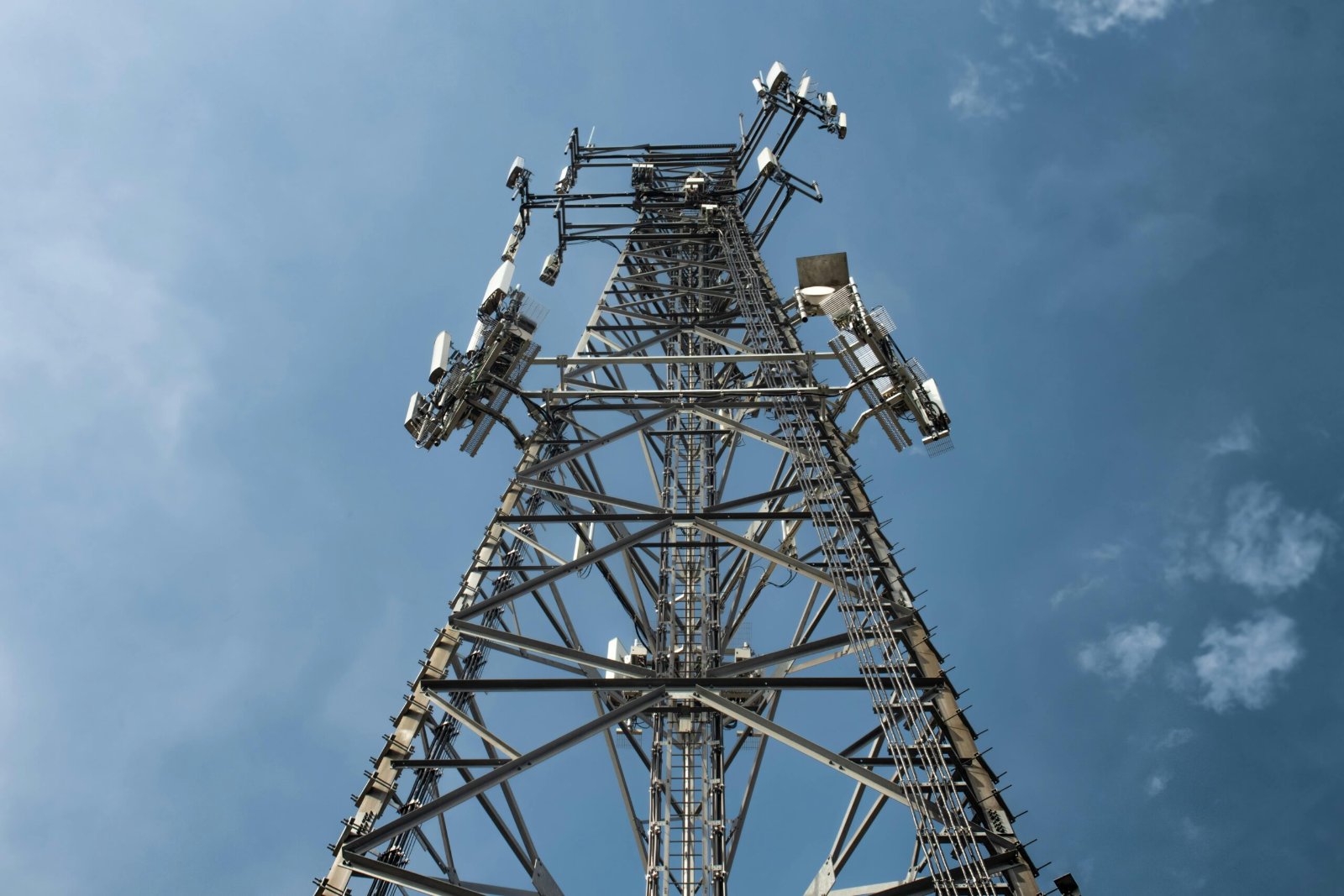
La technologie de « network slicing » de la 5G présente à la fois des défis et des opportunités en matière de conformité aux obligations d’interception légale. Le « network slicing » est l’une des fonctionnalités phares de l’architecture 5G autonome (SA). En créant des partitions réseau logiquement isolées sur une infrastructure physique partagée, les opérateurs peuvent adapter les caractéristiques de connectivité — latence, bande passante, fiabilité et sécurité — aux exigences spécifiques de différents services, applications ou groupes de clients. En matière d’interception légale, le « network slicing » introduit à la fois des complications importantes et, paradoxalement, des simplifications potentielles. Il est essentiel pour tout opérateur déployant ou planifiant un réseau 5G SA de comprendre comment le « network slicing » affecte le ciblage, l’exécution et la mise en œuvre de l’interception légale.
Cet article examine les liens entre le « network slicing » et l'interception légale, en abordant l'architecture technique, les défis liés à l'identification des cibles et à la mise en œuvre de l'interception, ainsi que les avantages potentiels que le « network slicing » peut offrir pour Opérations LI, ainsi que les mesures concrètes que les opérateurs doivent prendre pour garantir la conformité dans un environnement de réseau segmenté.
Comment le « network slicing » 5G influe sur LI
In a 5G SA network, a network slice is a logically isolated end-to-end network that includes specific configurations of radio access, transport, and core network resources. Each slice is identified by a Single Network Slice Selection Assistance Information (S-NSSAI) value and is designed to meet particular service requirements. For example, one slice might be optimised for ultra-reliable low-latency communication (URLLC) for industrial control, another for massive IoT (MIoT) sensor networks, and a third might provide enhanced mobile broadband (eMBB) for consumer smartphones.
Du point de vue du réseau central, chaque tranche peut disposer de ses propres instances dédiées de certaines fonctions réseau — telles que le SMF, l’UPF et le PCF — ou partager des instances de fonctions réseau avec d’autres tranches. Le degré d’isolation entre les tranches est configurable et dépend de la stratégie de déploiement de l’opérateur ainsi que des exigences de la tranche. Cette flexibilité constitue un avantage clé du « slicing », mais elle introduit également une certaine complexité pour les fonctions qui doivent fonctionner au-delà des frontières des tranches, notamment l’interception légale.
A single subscriber may simultaneously use services across multiple slices. A smartphone user might have their voice traffic routed through one slice, their video streaming through another, and their IoT companion device connected through a third. Each slice may have its own UPF, its own PDU session, and its own IP addressing. Which slice carries which traffic is decided by the device’s route selection policy (URSP), within the slices the network allows, selected with the help of the NSSF and the subscription data in the UDM.
Complications liées au ciblage du LI
Network slicing complicates LI targeting in several ways. The most fundamental complication is that a target’s traffic may be spread across multiple slices, each potentially served by different UPF instances. A single interception order must result in the capture of all the target’s communications, regardless of which slice they traverse. This requires the operator to equip every network function that can serve the target, including dedicated per-slice SMFs and UPFs, with LI functions, and to provision the task to all of them.
Target identification in a sliced environment is more complex than in a non-sliced network. The same subscriber may appear with different session contexts, different IP addresses, and different QoS characteristics depending on which slice is serving a particular communication flow. Every interception point tags its X2/X3 records with the task’s XID, so the mediation function delivers every session in every slice under the same LIID, and the IRI tells the LEA which slice (S-NSSAI) each session used.
The dynamic nature of slice allocation adds further complexity. Slices can be created, modified, and terminated dynamically, and a target’s traffic may move between slices as service requirements change. If the task was provisioned only to the network functions of some slices, a change in the target’s subscribed slices (which the UDM reports as IRI) can leave a gap, and the administration function must extend the task to the SMFs of the new slices. Provisioning every SMF that can serve the target avoids this, because UPF interception is then triggered per session.
Another complication arises from the potential for different slices to be operated by different entities. In some business models, an enterprise or vertical industry partner may operate its own slice on the operator’s infrastructure, potentially with its own network functions and operational management. The question of who is responsible for lawful interception within such a slice — the infrastructure operator, the slice tenant, or both — is a regulatory and contractual question. In most frameworks the answer follows the service: whoever provides a publicly available communications service over the slice carries the LI obligation. A private enterprise slice that is not offered to the public is usually out of scope, and the infrastructure operator remains responsible for the parts of its network that serve public services. Contracts must reflect this, and the operator must keep its LI functions secure even in slices it does not manage.
Comment le découpage peut simplifier le LI
Despite these complications, network slicing can also offer potential benefits for lawful interception. The logical isolation of slices means that traffic within a slice is already segregated from traffic in other slices. If the target can only use certain slices, the administration function can provision the task only to the network functions of those slices (3GPP TS 33.127, clause 5.3.5.5), which keeps the number of provisioned interception points small.
Slicing can also enable more granular interception. Instead of intercepting all of a target’s traffic — which in a modern smartphone environment can include significant volumes of background data, software updates, and other non-relevant traffic — slicing could potentially allow the interception to be focused on specific service types or communication flows. In practice, however, limiting interception to particular slices is generally not an option: national rules such as § 5(2) TKÜV in Germany require a complete copy of the target’s communications. Where an order covers only certain services, the standards provide service scoping by service type, not by slice.
Du point de vue de la sécurité, l'isolation entre les tranches peut offrir une protection supplémentaire à la fonction LI. En déployant les composants LI au sein d'une tranche dédiée et sécurisée — ou en veillant à ce que le trafic LI entre les fonctions réseau et le plateforme de médiation is carried on a separate, isolated transport path — operators can enhance the confidentiality and integrity of the interception process. Slice isolation can help, but LI functions still need their own protected trust domain. In virtualised networks 3GPP requires them to meet ETSI GS NFV-SEC 012 (TS 33.126, R6.6-160).
Normes 3GPP relatives à la LI dans les réseaux segmentés
The 3GPP LI architecture for 5G, defined in TS 33.127 and TS 33.128, addresses network slicing explicitly. 3GPP’s LI requirements (TS 33.126) are technology-neutral: interception must be complete regardless of how the network is built, and that includes slicing. TS 33.127 and TS 33.128 add slice-aware provisioning and report slice information (S-NSSAI) in the IRI. On X1, a task names the target and, optionally, the service types to intercept. Slices are not an X1 parameter. Instead, the administration function decides which network functions, and therefore which slices, receive the task (3GPP TS 33.127, clause 5.3.5.5), and the X2 and X3 interfaces carry xIRI and xCC from interception points in any slice to the MDF, which turns them into IRI and CC for delivery.
The standards define that the AMF, which handles the target’s registration and mobility management, is a key interception point for slice-related IRI. When a target registers with the network and is allocated to one or more slices, the AMF generates IRI events that include the slice information. CC interception in the UPF is triggered per PDU session: the SMF serving that session, which holds the LI task, instructs its UPF over the internal LI_T3 interface. The operator must therefore make sure every SMF that can serve the target, in every slice, carries the task and that every UPF supports LI_T3 and X3.
The UDM is itself an interception point: it reports changes to the target’s subscribed slices as IRI. To keep coverage complete as slices change, the LI administration function learns about new SMFs and UPFs from the operator’s management and orchestration systems when they are instantiated, and from the System Information Retrieval Function (SIRF) in the NRF when they register and are ready for traffic (3GPP TS 33.127, clauses 5.3.5.3 and 5.3.6).
Implications pratiques pour les opérateurs
Operators deploying 5G SA networks with slicing capabilities should address LI requirements from the earliest stages of slice design and deployment. Several practical steps are recommended. First, ensure that your LI system is aware of the slice architecture and can dynamically discover and configure interception points within any slice. This requires integration between the LI administration function and the operator’s orchestration systems and the NRF-based System Information Retrieval Function (SIRF), so that new SMFs and UPFs are provisioned as they are created.
Second, verify that the UPFs deployed within each slice support the LI_T3 trigger and the X3 interface for content delivery to the LI mediation function, and that the SMFs serving those slices support the IRI point of interception and the CC triggering function. If a slice uses a UPF that does not support X3, the operator will have a gap in its interception capability for traffic traversing that slice. This is a procurement requirement that should be included in all UPF vendor specifications.
Third, develop procedures for handling interception orders that span multiple slices. The LI operations team must understand how to provision tasks that cover all of a target’s slice allocations and when the administration function has to extend a task to the network functions of additional slices. Automation of this process is highly recommended, as manual configuration across multiple slices is error-prone and slow.
Quatrièmement, il convient d’aborder les aspects liés à la gouvernance et aux aspects contractuels de l’interception légale (LI) dans les tranches partagées ou gérées par l’entreprise. Si des tiers exploitent des tranches sur votre infrastructure, les responsabilités en matière d’interception légale doivent être clairement définies dans les accords commerciaux et doivent être conformes aux exigences réglementaires de chaque juridiction concernée.
Conclusion
Le « network slicing » dans la 5G en mode autonome (SA) présente à la fois des défis et des opportunités pour l’interception légale. La répartition du trafic d’une cible sur plusieurs tranches, la nature dynamique de l’attribution des tranches et la possibilité d’une exploitation des tranches par des tiers compliquent toutes le processus d’interception. Dans le même temps, l’isolation logique et la granularité du découpage peuvent offrir de nouvelles approches pour une interception ciblée et efficace. Pour les opérateurs, l’essentiel est de prendre en compte de manière proactive les exigences en matière d’interception légale dès la conception des tranches, de s’assurer que leurs systèmes d’interception légale prennent en charge les tranches et s’adaptent de manière dynamique, et d’établir une gouvernance claire des responsabilités en matière d’interception dans les environnements de tranches multi-locataires. Ce faisant, les opérateurs peuvent respecter leurs obligations de conformité tout en tirant pleinement parti du potentiel du découpage du réseau 5G.
À l’avenir, l’évolution du « network slicing » vers des modèles plus dynamiques et basés sur l’intention ne fera qu’accroître la complexité de l’interception légale (LI) dans les environnements segmentés. Les réseaux futurs pourraient comporter des tranches créées et supprimées à la demande, avec des ressources allouées et libérées en temps réel en fonction des besoins des services. Le système d’interception légale doit évoluer parallèlement à ces capacités, en maintenant une couverture d’interception complète même lorsque la topologie sous-jacente du réseau change en permanence. Les opérateurs qui investissent dans des solutions flexibles et conformes aux normes Solutions LI seront ainsi mieux préparées à s'adapter à ces évolutions futures et à garantir une conformité sans faille à mesure que leurs réseaux 5G gagneront en maturité.
À mesure que les déploiements de la 5G avec découpage de réseau (network slicing) gagneront en maturité, les défis liés à l'interception évolueront. Les opérateurs doivent concevoir l'architecture LI de leur réseau 5G à découpage en tenant compte de l'évolutivité future.
Articles connexes
Pour en savoir plus sur des sujets connexes, consultez les articles suivants :
- Interfaces X1/X2/X3 dans la 5G : l'architecture 3GPP LI expliquée
- eSIM et interception légale : Ce que l'architecture RSP signifie pour la conformité
- DNS crypté (DoH/DoT) et son impact sur les capacités d'interception légale
Ressources externes
Les ressources externes suivantes fournissent un contexte supplémentaire et une documentation officielle :