
יירוט חוקי
פתרונות ליירוט חוקי לרשתות, OTT ו-5G
יירוט מבוסס תקנים עבור שירותי תקשורת קבועים, סלולריים, IMS, OTT ורכבים מחוברים, המסופק על ידי צוות מקלן בעל אישורים רבים מטעם BNetzA וצוות עובדים בעלי סיווג ביטחוני.
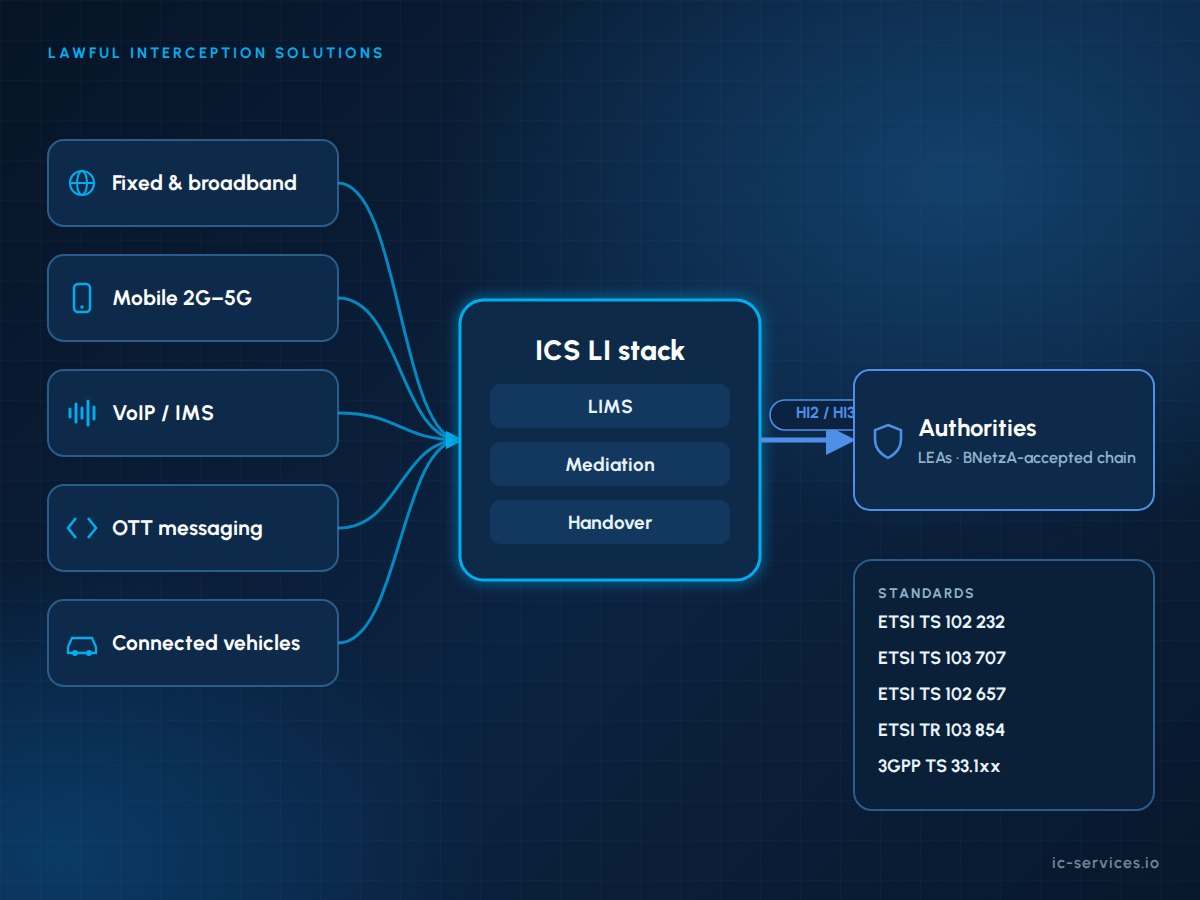
פתרונות ליירוט חוקי הם המערכות והתהליכים המאפשרים למפעילי רשתות ולספקי שירותים להעביר תקשורת לגופים מוסמכים בהתאם לצו משפטי. פתרונות אלה כוללים הגדרת יעדים, לכידת נתונים, תיווך והעברה סטנדרטית. ICS מספקת פתרונות ליירוט חוקי עבור רשתות תקשורת מסורתיות, רשתות סלולריות 3GPP, לרבות 5G ו-IMS, שירותי OTT, נתונים שמורים וכלי רכב מחוברים.
עובדות עיקריות
- הבסיס המשפטי בגרמניה: סעיף 170 לחוק התקשורת (TKG), תקנות ה-TKÜV ותקנות ה-TR TKÜV.
- תקנים: ETSI TS 102 232, TS 103 707, TS 102 657, TR 103 854 ו-3GPP TS 33.106/33.107/33.108, וכן TS 33.126/33.127/33.128 עבור 5G.
- כיסוי: קווי, סלולרי, IMS, 5G, OTT, נתונים שנשמרו וכלי רכב מחוברים.
- הישגים: יותר מ-20 שנות ניסיון ואישורים רבים מטעם BNetzA, לרבות AKÜ.
- ציר זמן: 4–12 שבועות לשילוב LIMS סטנדרטי, 3–6 חודשים לפרויקט "מפתח ביד" מלא.
- אנשים: צוות שעבר בדיקת אבטחה מטעם משרד הפנים הפדרלי הגרמני.
מה נדרש מפתרונות ליירוט חוקי?
בגרמניה, סעיף 170 לחוק התקשורת (TKG) מחייב את מפעילי שירותי התקשורת הזמינים לציבור לספק תשתיות טכניות לצורך יירוט. תקנות ה-TKÜV קובעות את הכללים הארגוניים והטכניים. תקנות ה-TR TKÜV מגדירות את הפרטים הטכניים, לרבות ממשקי העברת הנתונים לגופים הממשלתיים.
על המפעילים להוכיח גם לסוכנות הרשת הפדרלית (BNetzA) כי המתקנים שברשותם עומדים בדרישות אלה. הליך הקבלה (Abnahme) הזה הוא לרוב השלב התובעני ביותר בפרויקט. הוא מצריך תיעוד מלא, מקרי בדיקה תקינים והעברה תקינה של הפרויקט לגופים המוסמכים.
מערכת פעילה מספקת שני זרמי נתונים. מידע הקשור ליירוט (IRI) מתאר מי תקשר, מתי והיכן. תוכן התקשורת (CC) נושא את הקול, ההודעות או הנתונים עצמם. שניהם חייבים להגיע לגוף אחד או יותר במבנה הנכון וללא עיכוב.
למידע על היסודות, קראו את המדריך שלנו בנושא מהו יירוט חוקי.
פטור לספקים קטנים. על פי תקנות ה-TKÜV, מפעילי מערכות עם לא יותר מ-10,000 משתמשים מחוברים אינם מחויבים להחזיק מתקני יירוט קבועים. עם זאת, עליהם לבצע צווי יירוט כאשר רשות כלשהי מגישה צו כזה. א תיבת LI זמנית זוהי דרך מעשית לעמוד בחובה זו.
פתרונות ליירוט חוקי לפי רשת ושירות
ICS מארגנת את תיק ההשקעות שלה במודולים המשתמשים בשכבת ניהול ותיווך משותפת.
01
יירוט חוקי מבוסס IP
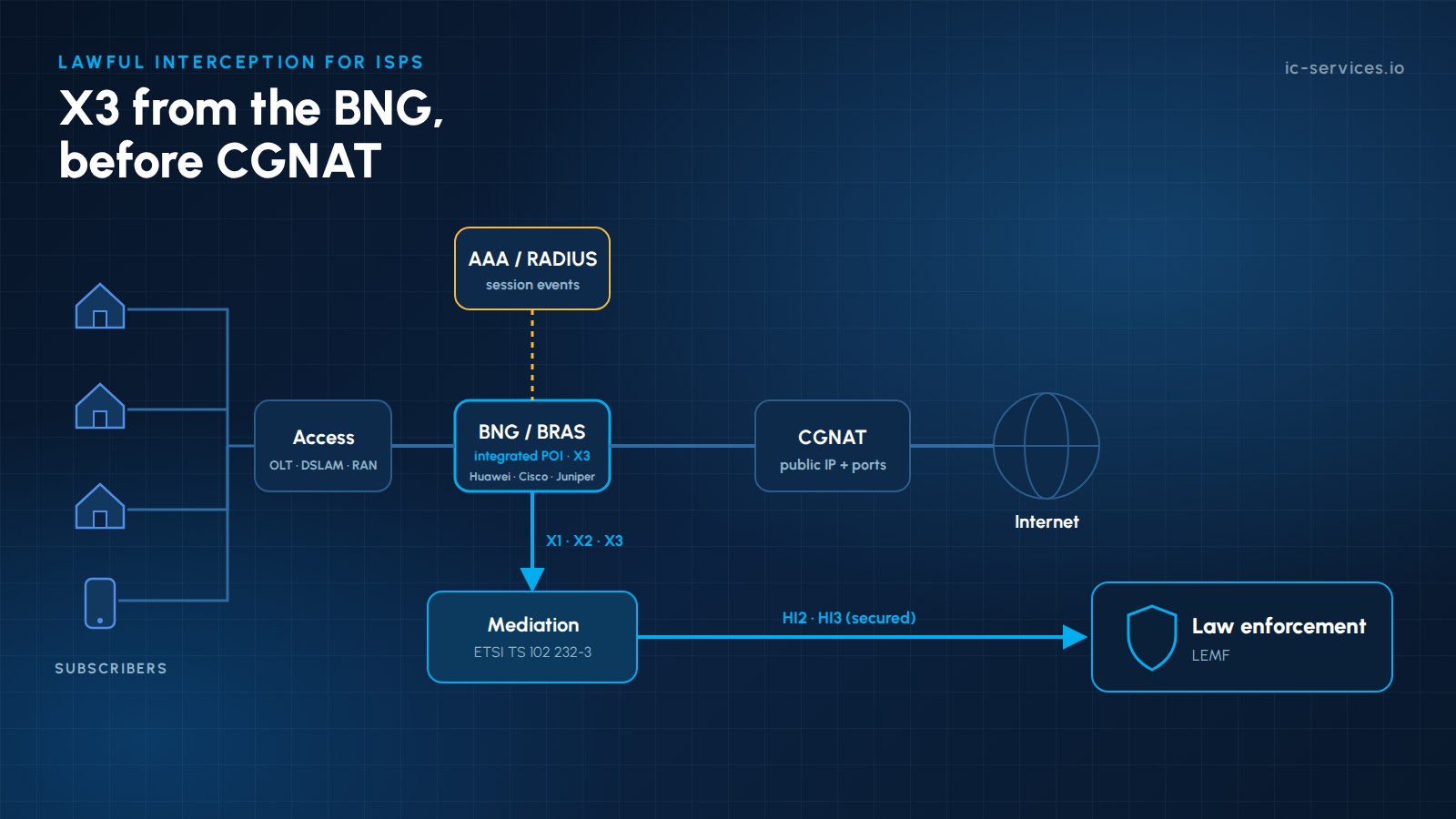
יירוט עבור ליבות קבועות, ניידות ו-IMS עם העברת שיחה (handover) מסוג HI2 ו-HI3 בהתאם לתקן ETSI TS 102 232. מכשירי BNG/BRAS ונתבים ברמת ספק שירות מעתיקים בעצמם את התעבורה של היעד ומעבירים אותה באמצעות X3. פלטפורמה אחת יכולה לשרת מספר גופים במקביל. למידע נוסף
02
שירותי OTT ושירותי אינטרנט
העברת שירותי הודעות ושיתוף פעולה באמצעות HTTP/XML בהתאם לתקן ETSI TS 103 707. תקן זה מספק לספקי OTT דרך מוגדרת ומבוססת-תקנים להעברת נתונים לגופים ממשלתיים.
03
LI של 3GPP למכשירים ניידים ול-5G
יירוט בליבות חבילות וב-IMS, עם לכידת IRI ו-CC בנקודות הייחוס הרלוונטיות. התמיכה תואמת את תקני 3GPP TS 33.106/33.107/33.108 ו-TS 33.126/33.127/33.128 עבור 5G. למידע נוסף
04
רכבים מחוברים
טיפול בבקשות לנתוני רכב בהתאם לתקן ETSI TR 103 854. התקן מתייחס לבקשות המבוססות על מספר זיהוי הרכב (VIN), מיפוי מזהים ושילוב עם מערכות לעיבוד תגובות. למידע נוסף
05
נתוני שימוש ומנויים
חשיפת נתוני שמירה ונתוני מנויים עם העברה בהתאם לתקן ETSI TS 102 657. צמצום נתונים ותקופות שמירה מוגדרות משולבים בתהליך העבודה. למידע נוסף
06
גרמניה: AKÜ
מערכת "Auslandskopfüberwachung" (AKÜ) עוסקת ביירוט חוצה גבולות של מזהים של יעדים זרים ברשתות הגרמניות. מערכת ICS מספקת ניתוב, רישום ודיווח תוך התחשבות בסמכויות השיפוט, ותומכת בנוהל של הרשות הפדרלית לתקשורת (BNetzA).
כיצד מתנהל פרויקט LI, החל מניתוח הפער ועד לקבלת האישור מ-BNetzA?
רוב הפרויקטים מתנהלים על פי אותם שישה שלבים, ללא תלות בגודל הרשת.
1
ניתוח פערים
אנו משווים את הרשת, השירותים וההגדרות הקיימות של LI שלך לסעיף 170 לחוק התקשורת (TKG), לתקן TKÜV ולתקן TR TKÜV.
2
אדריכלות ועיצוב
אנו מגדירים נקודות יירוט, תיווך, ממשקי העברה והגופים שאליהם יש לספק את השירות.
3
שילוב
אנו מחברים את ה- LIMS ותיווך לרשת הליבה, ל-IMS או לפלטפורמות השירות שלכם. ככל שהדבר אפשרי, BNG/BRAS, נתבים וליבות מנות מעבירים את התעבורה של היעד באופן מקורי באמצעות X1/X2/X3, עם אינטגרציות עבור Huawei, Cisco, Juniper וספקים מובילים אחרים.
4
בדיקות
אנו מבצעים בדיקות מקצה לקצה של תהליכי ההקמה, מסירת ה-IRI וה-CC, וכן של פורמטי המסירה.
5
תיעוד וקבלת המוצר
אנו מכינים את המסמכים הנדרשים ומלווים אתכם לאורך הליך האישור של BNetzA.
כמה זמן נמשך תהליך הפריסה?
שילוב סטנדרטי של מערכת LIMS ברשת IP או VoIP קיימת אורך בדרך כלל 4–12 שבועות. הגדרת המכשיר בשיטת "Plug-and-play" מקצרת את משך העבודה באתר.
פרויקט מלא "מפתח ביד" אורך 3–6 חודשים. היקף זה כולל תיווך מותאם אישית, העברת אחריות בין מספר גורמים והליך קבלת האישור הרגולטורי.
הגורמים העיקריים המשפיעים על לוח הזמנים הם:
- מספר רכיבי הרשת והשירותים הנכללים בהיקף זה
- ממשקי ההעברה הנדרשים לכל סוכנות
- תיווך מותאם אישית עבור מקורות נתונים לא סטנדרטיים
- זמינות של משבצות בדיקה אצל הסוכנויות וב-BNetzA
איזה תקן חל על איזה שירות?
הטבלה מציגה את תקני המסירה והממשק העיקריים עבור כל סוג שירות. הפרופיל המדויק שלך תלוי בדרישות הלאומיות החלות עליך.
| שירות או ממשק | התקן הרלוונטי |
|---|---|
| נתוני IP, קווי ונייד, IMS | ETSI TS 102 232-1 עד -7 |
| שיחות קוליות במיתוג מעגלים | ETSI TS 101 671 |
| רשתות סלולריות עד 4G ו-IMS | 3GPP TS 33.106, TS 33.107, TS 33.108 |
| רשתות 5G | 3GPP TS 33.126, TS 33.127, TS 33.128 |
| ממשקים פנימיים X1/X2/X3 | ETSI TS 103 221-1 ו-2 |
| ממשק Warrant (HI1) | ETSI TS 103 120 |
| הודעות ושיתוף פעולה ב-OTT | ETSI TS 103 707 |
| נתוני לקוחות קיימים ומנויים | ETSI TS 102 657 |
| רכבים מחוברים | ETSI TR 103 854 |
| תקנות ארציות בגרמניה | § 170 לחוק התקשורת (TKG), תקנות הפיקוח על התקשורת (TKÜV), תקנות הפיקוח על התקשורת (TR TKÜV) |
למידע רקע על מודל הממשק, ראו את המאמרים שלנו בנושא HI1, HI2 ו-HI3 ו- IRI לעומת CC.
מי נהנה מפתרונות היירוט החוקיים של ICS?
01
מפעילי רשתות
מפעילי סלולר וקווי קבע זוכים לפלטפורמה אחת ליירוט שיחות במערכות מסורתיות, IP, IMS ו-5G. ענף התקשורת
02
ספקי אינטרנט וספקי OTT
ספקי שירותי אינטרנט ושירותי OTT נהנים ממסירת שיחות המבוססת על תקנים, מבלי שיידרשו לפתח מומחיות פנימית בתחום LI. ספקים קטנים יכולים לעמוד בהתחייבויות הנובעות מהזמנות באמצעות תשתית זמנית.
03
רשויות אכיפת החוק והרגולטורים
סוכנויות ורגולטורים עובדים עם שותף שמבין הן את היבט הרשת והן את היבט העברת השיחה. רשויות הפיקוח ואכיפת החוק
מדוע ICS
01
יותר מ-20 שנים בלונג איילנד
חברת ICS פועלת בתחום התקשורת והאזנות חוקיות כבר יותר משני עשורים. אנו מכירים את נקודת המבט של המפעילים ואת זו של הגופים הממשלתיים.
02
אישורים מרובים מטעם ה-BNetzA
פתרונות היירוט שלנו עברו מספר הליכי אישור של BNetzA, לרבות AKÜ. אנו מיישמים את הניסיון הזה בכל פרויקט חדש.
03
עובדים בעלי סיווג ביטחוני
צוותנו קיבל אישור ביטחוני ממשרד הפנים הפדרלי הגרמני, והוא רשאי לטפל במידע מסווג.
04
תיק עבודות מלא של שותף אחד
LIMS, גישור, מכשירים, אינטגרציה ותפעול מנוהל – כל אלה מסופקים על ידי צוות אחד. אותה תשתית תומכת גם בשמירת נתונים ובראיות אלקטרוניות.
איך ניתן ליצור קשר עם צוות ICS?
ICS International Carrier Services GmbH, Lindenstr. 82, 50674 קלן, גרמניה. טלפון: +49 221 42919-0. דוא"ל: info@ic-services.io.
אנו מספקים פתרונות ליירוט חוקי למפעילים ולרשויות בגרמניה ובמדינות אחרות. השתמשו ב- דף יצירת קשר כדי לתאר את הפרויקט שלך.
שאלות נפוצות
מהו הבסיס המשפטי ליירוט חוקי בגרמניה?
הבסיס המשפטי הוא סעיף 170 לחוק התקשורת (TKG). סעיף זה מחייב את מפעילי שירותי התקשורת הזמינים לציבור לספק אמצעי יירוט ולבצע צווים. תקנת יירוט התקשורת (TKÜV) מוסיפה כללים ארגוניים וטכניים. ההנחיה הטכנית (TR TKÜV) מגדירה את הממשקים והפורמטים. על המפעילים להוכיח את עמידתם בדרישות בפני הסוכנות הפדרלית לתקשורת (Bundesnetzagentur) במסגרת הליך קבלה.
כמה זמן נדרש לפריסת פתרון ליירוט חוקי?
שילוב LIMS סטנדרטי ברשת IP או VoIP קיימת אורך בדרך כלל 4–12 שבועות, בסיוע תהליך התקנה מסוג "התחבר והפעל" (plug-and-play). פרויקט "מפתח ביד" מלא אורך 3–6 חודשים. היקף זה כולל תיווך מותאם אישית, העברה לידי מספר גופים והליך קבלת האישור הרגולטורי. מספר השירותים, מקורות הנתונים ומשבצות הבדיקה של הגופים השונים קובעים את לוח הזמנים הסופי.
האם ספקים קטנים זקוקים למתקני יירוט קבועים?
על פי תקנות ה-TKÜV, מפעילי מערכות שבהן מספר המשתמשים המחוברים אינו עולה על 10,000 אינם מחויבים להחזיק מתקני יירוט קבועים. הפטור אינו מבטל את החובה עצמה. כאשר רשות מגישה צו יירוט, על הספק עדיין לממש אותו. לפיכך, ספקים קטנים רבים מכינים מערך זמני, כגון תיבת LI זמנית, שניתן להפעיל במהירות.
האם ל-ICS יש אישורים מ-BNetzA?
כן. לחברת ICS יש מספר אישורים מ-BNetzA עבור פתרונות ההאזנה שלה, כולל AKÜ. ה-BNetzA אינה מעניקה הסמכה לחברות או למוצרים. היא בודקת אם מתקני היירוט של המפעיל עומדים בדרישות החוקיות והטכניות. ICS תומכת בלקוחות במהלך הליך זה באמצעות תיעוד, הכנה למבחנים ומומחיות טכנית ישירה מצד צוות בעל סיווג ביטחוני.
אילו תקנים תומכים פתרונות היירוט החוקי של ICS?
פתרונות היירוט החוקי של ICS תומכים בתקן ETSI TS 102 232 להעברת IP ובתקן TS 103 707 להעברת הודעות OTT. נתונים שנשמרים עומדים בתקן TS 102 657. עבור כלי רכב מחוברים, ICS משתמשת בתקן ETSI TR 103 854. רשתות סלולריות מכוסות על ידי תקני 3GPP TS 33.106/33.107/33.108, ורשתות 5G על ידי תקני TS 33.126/33.127/33.128. הדרישות הגרמניות פועלות בהתאם ל-TR TKÜV וכוללות את תקן AKÜ.
האם ICS תומך בשירותי 5G ו-OTT?
כן. עבור 5G, ICS לוכד את ה-IRI וה-CC בליבות החבילות וב-IMS. הלכידה מתבצעת בהתאם לנקודות הייחוס המפורטות ב-3GPP TS 33.126, TS 33.127 ו-TS 33.128. עבור שירותי העברת הודעות ושיתוף פעולה מסוג OTT, ICS מספק העברת HTTP/XML בהתאם ל-ETSI TS 103 707. שניהם פועלים באותה שכבת ניהול ותיווך כמו יירוט קווי ונייד.
תכננו את הדרך שלכם לקבלת אישור מ-BNetzA
ספר לנו על הרשת, השירותים והמועדים שלך. אנו מזהים את הפערים ומציעים תוכנית פרויקט ריאלית.