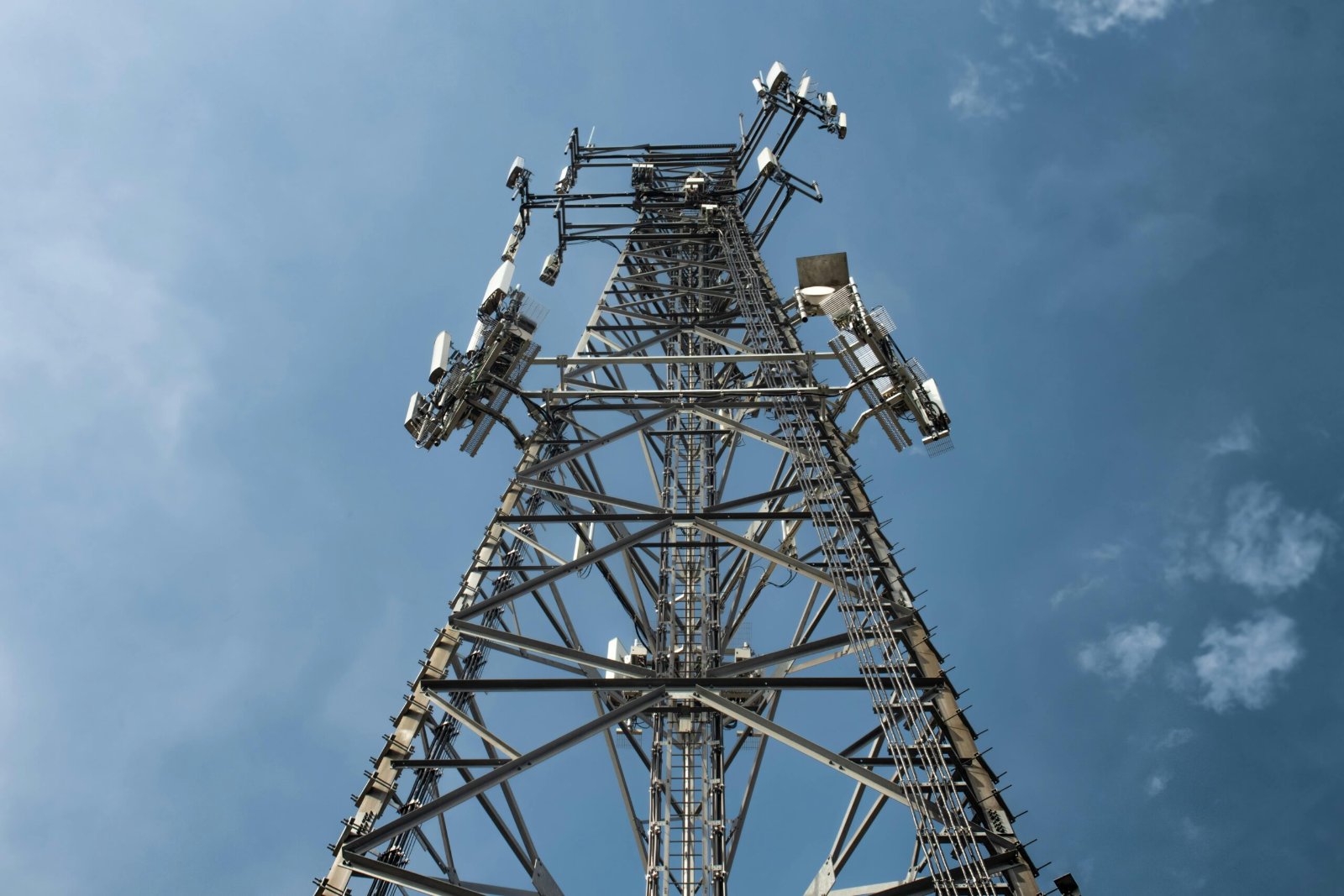


Die Telekommunikationsüberwachung von eSIMs stellt im Vergleich zur herkömmlichen SIM-basierten Überwachung besondere technische Herausforderungen dar. Der Übergang von physischen SIM-Karten zur Embedded-SIM-Technologie (eSIM) verändert die Mobilfunklandschaft grundlegend. Auf Basis der „Remote SIM Provisioning“ (RSP)-Architektur der GSMA ermöglicht die eSIM den Teilnehmern, den Netzbetreiber zu wechseln, Profile zu aktivieren und mehrere Verträge zu verwalten, ohne eine SIM-Karte physisch austauschen zu müssen. Für Verbraucher bedeutet dies mehr Flexibilität und Komfort. Für Netzbetreiber – und insbesondere für diejenigen, die für Einhaltung der TKÜ-Vorschriften — Die eSIM bringt neue Herausforderungen mit sich, die es zu verstehen und zu bewältigen gilt.
Dieser Artikel untersucht, wie sich die RSP-Architektur auf die Telekommunikationsüberwachung auswirkt, zeigt die spezifischen Herausforderungen auf, die eSIM für die Zielidentifizierung und das Überwachungsmanagement mit sich bringt, und bietet praktische Leitlinien für Netzbetreiber, die in einer eSIM-fähigen Umgebung die Einhaltung der Vorschriften gewährleisten möchten.
So funktioniert die Telekommunikationsüberwachung von eSIMs
The GSMA RSP architecture defines the ecosystem for managing eSIM profiles. The key components include the Subscription Manager — Data Preparation (SM-DP+), which prepares and securely delivers operator profiles to eSIM devices; the Subscription Manager — Discovery Server (SM-DS), which facilitates the discovery of available profiles; the eUICC (embedded Universal Integrated Circuit Card), which is the secure element within the device that hosts one or more operator profiles; and the Local Profile Assistant (LPA), which is the software on the device that manages profile download, installation, and switching. For IoT devices, GSMA SGP.31/SGP.32 replaces the user-driven LPA with a remote eSIM IoT Manager (eIM).
Under the RSP model, an operator’s profile — containing the IMSI, authentication credentials, network access configuration, and other parameters — is downloaded and installed onto the eUICC remotely. Multiple profiles can coexist on a single eUICC. Older eUICCs allow only one enabled profile at a time; since GSMA SGP.22 v3, devices supporting Multiple Enabled Profiles (MEP) can run two at once. Subscribers can switch between profiles — and effectively between operators — through a software operation on the device, without any physical intervention.
This dynamic, software-driven provisioning model is fundamentally different from the traditional physical SIM model, where the IMSI is personalised onto a card that has to be physically delivered. The implications for lawful interception are significant.
Herausforderungen bei der Zielerkennung
In Telekommunikationsüberwachungsanordnungen wird die Zielperson in der Regel anhand eines oder mehrerer Identifikationsmerkmale identifiziert: MSISDN (Telefonnummer), IMSI (Teilnehmerkennung), IMEI (Gerätekennung) oder IP-Adresse. Das eSIM-Modell erschwert jede dieser Identifizierungsmethoden auf unterschiedliche Weise.
MSISDN-based targeting is affected by the ease with which subscribers can change operators — and by extension change their MSISDN — through a simple profile switch. A target who suspects surveillance may switch to a different profile and MSISDN without a physical SIM changing hands. Similar switches have always been possible with dual-SIM phones. Each new profile still means a new subscription (in Germany, prepaid profiles require an identity check before activation, § 172(2) TKG), and its download is logged against the device’s EID. The operator that was performing the interception may lose visibility of the target entirely if the target activates a profile from a different operator.
Die IMSI-basierte Zielerfassung steht vor ähnlichen Herausforderungen. Jedes Betreiberprofil auf der eUICC verfügt über eine eigene IMSI. Wenn die Zielperson das Profil wechselt, wird eine andere IMSI aktiv, und die ursprüngliche IMSI ist im Netzwerk nicht mehr sichtbar. Der Betreiber, der die Kommunikation anhand der ursprünglichen IMSI abfängt, wird beobachten, dass die Zielperson scheinbar aus dem Netzwerk verschwindet.
IMEI-based targeting is more stable in the eSIM context, as the IMEI is associated with the device rather than the SIM profile. Note that dual-SIM and multi-profile devices carry a separate IMEI for each simultaneously active subscription, and that the network usually learns the IMEI only at registration. However, IMEI-based interception has its own limitations — it may capture communications from other users who share the device, and it does not help if the target uses multiple devices.
Das auf IP-Adressen basierende Targeting ist von Natur aus dynamisch und wird durch eSIM nicht speziell beeinflusst; die allgemeine Komplexität des Targetings in einer eSIM-Umgebung könnte jedoch dazu führen, dass Strafverfolgungsbehörden stärker auf die IP-basierte Identifizierung zurückgreifen, was wiederum eigene Herausforderungen hinsichtlich der dynamischen Zuweisung und der Netzwerkadressübersetzung mit sich bringt.
Profilwechsel und Kontinuität der Überwachung
One of the most significant challenges that eSIM creates for lawful interception is the potential for interception discontinuity during profile switches. When a target switches from one operator profile to another on the same device, the interception that was active on the first operator’s network must be coordinated with a new interception on the second operator’s network. In practice, law enforcement must identify the new operator, obtain a new order and serve it there, which may take hours or days, during which the target’s communications go unmonitored.
The speed and ease of profile switching in the eSIM model — which can be accomplished in seconds on many devices — contrasts sharply with the time required to establish a new interception on a different operator’s network. This temporal gap is an investigative challenge for law enforcement rather than a compliance gap for the original operator, whose obligation ends at its own subscription and the identifiers named in the order.
Addressing this challenge requires enhanced coordination mechanisms between operators and law enforcement, potentially including automated notifications when a target’s profile is deactivated and standardised procedures for rapidly establishing interceptions on the target’s new operator. Standardised solutions are not yet widely available.
Szenarien mit mehreren Profilen und Geräten
Die eSIM-Technologie ermöglicht Szenarien, die mit herkömmlichen TKÜ-Methoden nur schwer zu bewältigen sind. Ein einzelnes Gerät kann mehrere Betreiberprofile enthalten, möglicherweise von Betreibern aus verschiedenen Ländern. Ein einzelner Teilnehmer kann eSIM-Profile auf mehreren Geräten haben – einem Smartphone, einem Tablet, einer Smartwatch und einem Laptop. Jede Kombination aus Profil und Gerät schafft einen potenziellen Kommunikationskanal, der möglicherweise überwacht werden muss.
For operators, this means that the scope of an interception may extend beyond the traditional single-subscriber, single-device model. Within its own customer base, the operator should be able to tell law enforcement which other subscriptions or eSIM profiles the same customer holds, so that the order can be extended. It can intercept only the identifiers the order names.
Für die Strafverfolgungsbehörden bedeutet das Mehrprofil-Modell, dass ein einziger Überwachungsbeschluss möglicherweise nicht ausreicht. Verfügt die Zielperson über Profile in den Netzwerken mehrerer Betreiber, müssen unter Umständen für jeden Betreiber separate Beschlüsse erlassen werden. Die Koordinierung dieser zahlreichen Beschlüsse – um eine lückenlose Abdeckung zu gewährleisten – erhöht die Komplexität des Ermittlungsverfahrens.
Auswirkungen auf das LI-System
To maintain effective lawful interception in an eSIM environment, operators must ensure that their LI systems address several specific requirements. First, operators should understand what the network actually sees. Switching profiles happens locally on the device. The operator’s network sees it the way it sees a phone being switched off: the target’s subscription deregisters, and the existing interception reports this as IRI. The SM-DP+ is not a real-time LI source. Its value is in the records it keeps, such as which EID a profile was downloaded to, which can support disclosure requests. The LI system should not push target data to the SM-DP+, which is often operated by a third party.
Second, the LI system must support the correlation of multiple identifiers associated with the same subscriber. A target may be known by different MSISDNs, IMSIs, and IP addresses depending on which profile is active. The LI system must maintain a mapping between these identifiers and the target’s interception order, ensuring that every identifier named in the order (MSISDN, IMSI/SUPI, IMEI/PEI) is intercepted, and that law enforcement can quickly learn which further identifiers the same customer uses.
Third, the LI system should deliver the standard registration and deregistration events promptly, since a profile switch shows up on the network as the target’s subscription deregistering. This information can be valuable to law enforcement in understanding the target’s behavior and in deciding on follow-up orders.
Viertens, der Betreiber Verwaltungsmandat system must be capable of handling the additional complexity introduced by eSIM. This includes the ability to modify interception parameters when the order is amended, to report promptly when a target’s subscription goes inactive, so that law enforcement can decide on follow-up orders, and to keep a complete audit trail of every order amendment, identifier change and task activation or deactivation.
Entwicklungen im Bereich der Regulierung und Normung
LI standards address the issue indirectly: identifiers are always tied to the subscription or device, not to the SIM form factor. 3GPP’s 5G LI architecture (TS 33.127/33.128) is SIM-agnostic: it intercepts by SUPI, PEI and GPSI, whether the credentials sit on a physical SIM or an eSIM profile.
National LI rules generally do not treat eSIM separately. In Germany, the TKÜV and TR TKÜV are technology-neutral: interception is tied to identifiers such as MSISDN, IMSI/SUPI and IMEI/PEI, so it applies to eSIM subscriptions exactly as to physical SIMs.
Schlussfolgerung
eSIM technology and the RSP architecture introduce significant new challenges for lawful interception, primarily related to target identification, interception continuity, and multi-profile scenarios. These challenges are not insurmountable, but they require operators to report registration events promptly, keep reliable records linking EID, ICCID and IMSI, and answer subscriber-data requests quickly. eSIM does not change an operator’s LI obligations; it changes how quickly law enforcement needs to learn about a target’s other subscriptions.
Praktische Schritte für Betreiber
Operators should begin by assessing their current eSIM deployment and its impact on their existing LI capabilities. This assessment should identify any gaps in target identification, interception continuity, or multi-profile handling. Based on the assessment, operators should develop a roadmap for enhancing their LI systems to address eSIM-specific challenges, prioritising the highest-risk gaps first. Prompt delivery of registration and deregistration events, and the ability to answer subscriber-data requests from the operator’s own EID, ICCID and IMSI records, are the foundation for supporting law enforcement in an eSIM environment. Operators should also engage with their national regulatory authority to understand any specific guidance or requirements related to eSIM and LI compliance, and should participate in industry forums and standards development activities to help shape the emerging solutions.
Mit der zunehmenden Verbreitung von eSIMs werden die Herausforderungen im Zusammenhang mit der Telekommunikationsüberwachung von eSIMs immer dringlicher. Netzbetreiber sollten die Anforderungen an die Telekommunikationsüberwachung von eSIMs proaktiv in ihre Compliance-Pläne einbeziehen.
Verwandte Artikel
Weitere Informationen zu verwandten Themen finden Sie in diesen Artikeln:
- LI für reine eSIM-MVNOs: Besondere Herausforderungen und praktische Lösungen
- MVNO vs. MNO: Wer ist rechtlich verantwortlich für Telekommunikationsüberwachung (TKÜ)?
- Network Slicing in 5G SA: Wie es das LI-Targeting erschwert (und vereinfachen kann)
Externe Ressourcen
Die folgenden externen Quellen bieten zusätzlichen Kontext und offizielle Dokumentation: