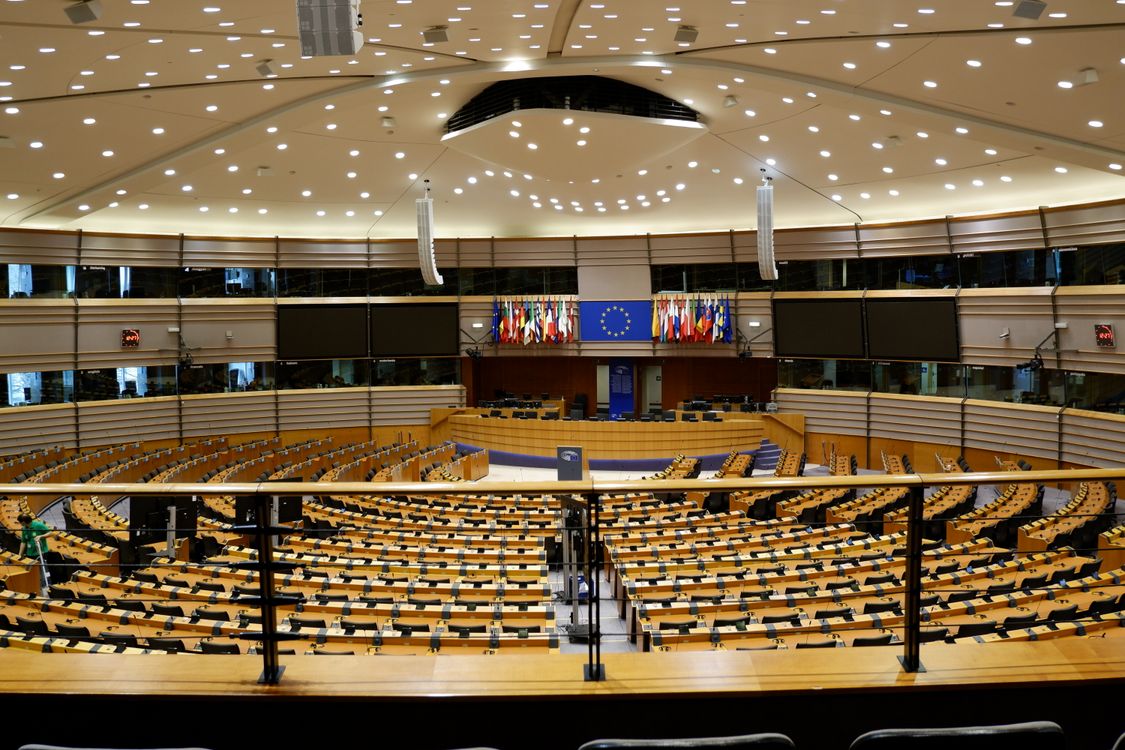
Les exigences de l'Autriche en matière d'interception légale en vertu de la TKG 2021 représentent des défis uniques pour les opérateurs de télécommunications. Le paysage réglementaire autrichien des télécommunications a subi une transformation significative avec l'introduction de la Telekommunikationsgesetz 2021 (TKG 2021), qui a remplacé l'ancienne TKG 2003 et a rapproché le cadre juridique du pays du Code européen des communications électroniques (EECC). Pour les opérateurs - en particulier les MVNO et les nouveaux venus sur le marché - il est essentiel de comprendre les implications de la TKG 2021 en matière d'interception légale afin d'atteindre et de maintenir la conformité sur le marché autrichien.
Austria splits the job in two. Real-time interception (IRI and CC) is handed over to the Federal Ministry of the Interior (BM.I) in the ETSI formats that the Überwachungsverordnung (ÜVO, BGBl. II Nr. 418/2001 as amended) prescribes. Requests for stored data (Auskünfte) and the answers to them run through the Durchlaufstelle (DLS), an encrypted mailbox system that the Bundesrechenzentrum (BRZ) operates under §§ 171–172 TKG 2021. This dual structure means that operators must satisfy both the legal requirements set out in the TKG 2021 and the Strafprozessordnung (StPO), and the technical specifications of the ÜVO for the delivery of intercepted communications. The DLS itself is governed by the TKG-Datensicherheitsverordnung (TKG-DSVO). Getting either side wrong can result in administrative fines and coercive measures.
Interception légale en Autriche dans le cadre du TKG 2021
The TKG 2021 establishes the general obligation for providers of public telecommunications services to cooperate with lawful interception requests. Section 162 of the TKG 2021 requires providers to supply all facilities needed for interception and data disclosure, and to cooperate with each order to the extent required. This obligation applies to all providers of public communications services, regardless of their size or business model — MVNOs are not exempt.
The procedural basis for ordering an interception is found in the StPO (Code of Criminal Procedure). Besides the StPO, providers must also cooperate with measures under the State Protection and Intelligence Act (SNG), the Fiscal Penal Code (FinStrG) and the Military Powers Act (MBG) (§ 162 TKG 2021). Under Austrian law, the interception is ordered by the public prosecutor’s office and requires prior authorisation by a court (§ 137 StPO). The StPO specifies the types of offences that can trigger an interception order, the maximum duration of surveillance, and the conditions under which extensions may be granted. Operators are legally bound to comply with valid interception orders and face penalties for refusal or undue delay.
One important distinction in Austrian law is between the interception of content data (Inhaltsdaten) and the collection of traffic data (Verkehrsdaten) and location data (Standortdaten). Each category has different legal thresholds and procedural requirements. Both measures generally require an intentional offence punishable by more than one year’s imprisonment (§ 135 StPO). Content interception also requires a close link between the intercepted device and the suspect.
Austria has had no general conservation des données since the Constitutional Court struck it down in 2014. Since 2018 the StPO has allowed targeted preservation instead (Anlassdatenspeicherung, § 135 (2b) StPO): on an initial suspicion, the public prosecutor can order a provider to keep specific data for up to 12 months. Operators must understand how these provisions interact with their general LI obligations to avoid gaps in compliance.
The BM.I Handover and the BRZ Durchlaufstelle
The Bundesrechenzentrum (BRZ) is Austria’s federal computing centre. It does not receive intercepted communications: real-time IRI and CC are delivered by the operator to the Federal Ministry of the Interior (BM.I), the forces de l'ordre side of the handover. The BRZ sets up and runs the Durchlaufstelle (DLS), an electronic mailbox system for the secure handling of data-disclosure requests and their answers (§§ 171–172 TKG 2021). Operators that pay the RTR financing contribution under § 34 KOG must answer requests through it.
The handover format is set by the ÜVO: ETSI ES 201 671 for classic voice, and ETSI TS 102 232-1/-5 for VoLTE. Operators must ensure that their systems can deliver both intercept-related information (IRI) and content of communications (CC) in these formats. The Austrian options (TCP over a VPN across the public Internet, LIID and operator identifiers agreed with the BM.I) are documented in the industry recommendation AK-TK EP 023, which the RTR publishes.
Data-disclosure requests (Auskünfte) and their answers are exchanged through the DLS mailbox system, with authentication, integrity protection and revision-proof statistics (§ 171 TKG 2021). Interception orders themselves are issued by the public prosecutor’s office on the basis of a court authorisation and are carried out by the provider together with the BM.I.
For operators new to the Austrian market, agreeing the handover with the BM.I is one of the earliest steps in the compliance journey. Before going live, the operator agrees the handover parameters with the BM.I and runs test interceptions over the agreed VPN connection. The DLS connection for data requests is set up separately with the BRZ. Operators should factor in several months for this process, as scheduling, development, and testing cycles can be lengthy — particularly for MVNOs that need to coordinate with their host MNO’s infrastructure.
Considérations spécifiques aux MVNO
MVNOs operating in Austria face the same fundamental challenge as in other European markets: every provider must cooperate with interception orders, but the technical capability to intercept often resides with the host MNO. Every provider must cooperate with interception orders (§ 162 TKG 2021), and holding a notification with the Rundfunk und Telekom Regulierungs-GmbH (RTR) does not reduce that duty. The detailed technical facility duties of the ÜVO, however, are tied to the network in which the subscriber connections physically exist. Light MVNOs therefore need a written arrangement with their host network that covers how orders are executed and who builds the handover.
Cela signifie que les MVNO doivent soit déployer leur propre infrastructure LI — y compris un fonction de médiation capable of delivering to the BM.I — or establish a formal agreement with their host MNO under which the MNO performs interception on the MVNO’s behalf. In the latter case, the MVNO must still ensure that the arrangement meets the ÜVO requirements and that the MVNO retains visibility and control over the process. Simply delegating responsibility to the MNO without formal agreements and technical validation is a compliance risk that the Fernmeldebüro and the BM.I will not overlook.
The architectural model of the MVNO also matters. Full MVNOs that operate their own core network elements have more direct control over interception capabilities and can implement LI systems that deliver directly to the BM.I. Light MVNOs and resellers, which rely more heavily on the host MNO’s infrastructure, face greater dependency and must invest more heavily in contractual and procedural safeguards.
Le traitement du trafic VoLTE est un domaine particulièrement complexe pour les MVNO. Comme les opérateurs autrichiens ont fait migrer les services vocaux vers le LTE et, de plus en plus, vers la 5G, l'interception des appels vocaux est passée d'une infrastructure à commutation de circuits à une infrastructure à commutation de paquets. Les MVNO qui dépendent de leur ORM hôte pour les services VoLTE doivent s'assurer que l'interception des appels VoLTE est couverte par leurs accords de LI, car les mécanismes techniques diffèrent considérablement de l'interception traditionnelle par commutation de circuits.
Exigences techniques de mise en œuvre
The technical requirements for LI in Austria follow ETSI standards with the Austrian options of AK-TK EP 023. Operators must support the delivery of IRI (via HI2) and CC (via HI3) in the formats prescribed by the ÜVO. The IRI must include all required metadata, such as calling and called numbers, timestamps, cell identifiers, and IP addresses, depending on the type of communication being intercepted.
For voice interception, the CC must be delivered as a real-time audio stream. For data interception, the CC consists of the IP packets associated with the target’s sessions. For VoLTE and VoWiFi, AK-TK EP 023 specifies delivery to the BM.I over TCP across a VPN, with the destination ports assigned by the BM.I. For other services, such as Internet access, the ÜVO names no handover standard, so the format and transport have to be agreed with the BM.I.
Les opérateurs doivent également mettre en œuvre de solides capacités d'identification des cibles. Les ordres d'interception autrichiens peuvent identifier les cibles par leur numéro de téléphone (MSISDN), leur IMSI, leur IMEI, leur adresse IP ou leur adresse électronique. Le système LI de l'opérateur doit être capable de résoudre ces identifiants pour les sessions actives ou les abonnés et de lancer l'interception en conséquence. Pour les MVNO, cela peut nécessiter une intégration avec les systèmes de gestion des abonnés du MNO hôte afin d'identifier et de suivre les cibles avec précision.
Before an operator receives live interception orders, the handover is tested with the BM.I over the agreed VPN connection. The test interceptions typically cover voice call interception, SMS interception, data session interception, and target identification using various selectors, and should be repeated whenever the LI systems are upgraded or modified.
Délais de mise en conformité et application
Breaches of the LI duties are administrative offences prosecuted by the Fernmeldebüro: up to EUR 50,000 for failing to cooperate with an order and up to EUR 100,000 for failing to provide the required interception facilities (§ 188 TKG 2021). The RTR handles notifications and market regulation, not LI enforcement. On application by the public prosecutor, the court can also impose coercive penalties (Beugemittel) to enforce cooperation (§ 93 (2) and (4) StPO).
The ÜVO obligations apply from the day the service launches, so operators entering the Austrian market should plan the six to twelve months of LI build and testing with the BM.I before commercial launch. This timeline accounts for technical development, integration testing, test interceptions with the BM.I, and internal process development. MVNOs with more complex supply chains may need longer, particularly if their host MNO agreements need to be renegotiated to include LI provisions.
Le paysage de l'application de la loi en Autriche évolue. À mesure que le marché des télécommunications se fragmente, avec l'arrivée sur le marché de nouveaux MVNO, d'opérateurs IoT et de fournisseurs OTT, l'attention portée par les autorités réglementaires à la conformité à la LI devrait s'intensifier. Les opérateurs qui établissent rapidement des cadres de conformité solides seront mieux placés pour s'adapter aux futurs changements réglementaires et éviter les mesures d'application.
Recommandations pratiques
Pour les opérateurs qui se préparent à conformité aux dispositions relatives à l'interception légale En Autriche, plusieurs mesures concrètes sont recommandées. Commencez par étudier attentivement la loi TKG 2021 et les articles pertinents du code de procédure pénale (StPO) afin de bien comprendre vos obligations légales. Faites appel à un conseiller juridique disposant d’une expertise spécifique dans le domaine des télécommunications en Autriche, car l’interaction entre le droit de la procédure pénale et la réglementation des télécommunications nécessite des connaissances spécialisées.
Contact the BM.I early in your planning process to agree the handover parameters, and set up the DLS connection with the BRZ. Develop your technical infrastructure — whether in-house or through a managed service provider — to meet the ÜVO and AK-TK EP 023 requirements. Ensure that your Système de gestion LI prend en charge l'ensemble du cycle de vie des mandats d'interception, depuis leur réception et leur activation jusqu'à leur suivi et leur désactivation.
Si vous êtes un MVNO, revoyez et, si nécessaire, renégociez votre accord avec l'ORM hôte afin d'aborder explicitement les responsabilités en matière de LI. Établissez des voies d'escalade claires et des engagements en matière de délais de réponse pour les demandes d'interception. Enfin, développez et documentez les processus internes de traitement des ordres d'interception, y compris les contrôles d'accès, les procédures de confidentialité et les pistes d'audit.
Conclusion
Austria’s lawful interception framework, anchored by the TKG 2021 and the ÜVO, with real-time handover to the BM.I and data requests through the BRZ Durchlaufstelle, represents a well-structured but demanding compliance environment. For MVNOs and new market entrants, the combination of legal obligations and technical requirements means that early planning, proactive engagement with the BM.I and the BRZ, and investment in robust LI infrastructure are essential. The consequences of non-compliance — administrative fines, coercive measures, and reputational damage — far outweigh the costs of getting it right from the start. By understanding the Austrian LI landscape and taking a systematic approach to compliance, operators can build a solid foundation for long-term success in this important European market.
The lawful interception Austria compliance landscape continues to evolve as the ÜVO and the industry recommendations are updated. Operators must ensure their lawful interception Austria implementations remain aligned with current specifications.
Articles connexes
Pour en savoir plus sur des sujets connexes, consultez les articles suivants :
- LI Requirements in the Netherlands: Telecommunicatiewet Chapter 13, ETSI-IP.nl and What MVNOs Must Know
- Italy’s LI Framework: Prosecutors, the Codice and What Foreign Operators Miss
Ressources externes
Les ressources externes suivantes fournissent un contexte supplémentaire et une documentation officielle :