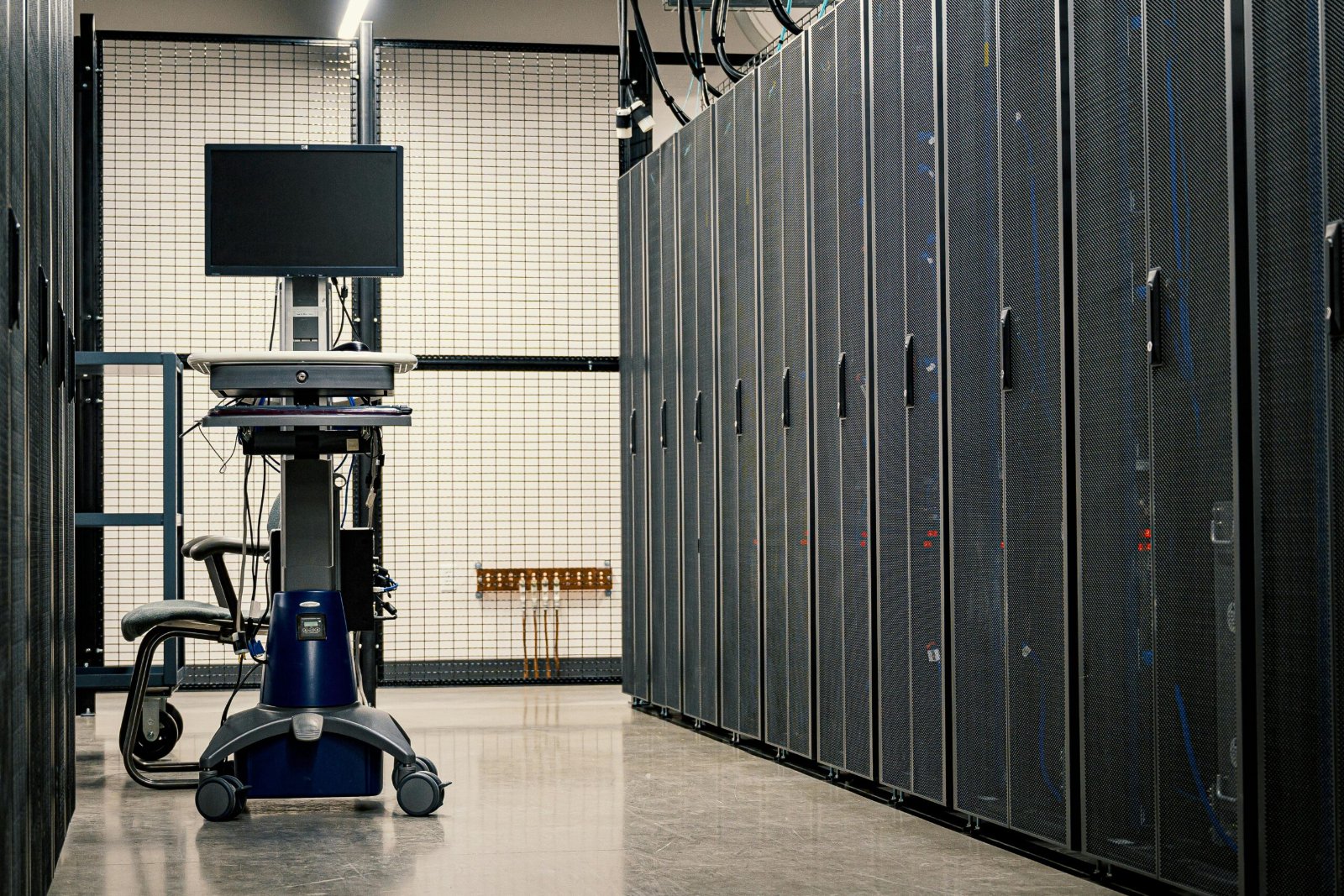
Il quadro normativo italiano in materia di intercettazioni legali comprende un panorama normativo complesso che gli operatori stranieri devono affrontare con cautela. L’approccio italiano alle intercettazioni legali è tra i più attivi in Europa. Italiano forze dell'ordine have historically been significant users of telecommunications surveillance tools, and the regulatory framework reflects this through detailed legal provisions, institutional oversight structures, and technical requirements that can be unfamiliar to operators entering the market from other EU member states. For foreign operators — particularly MVNOs and OTT providers expanding into Italy — the combination of the Codice di Procedura Penale, the Codice delle Comunicazioni Elettroniche and the decentralised Procura model creates a compliance environment that demands careful attention.
Comprendere il quadro normativo italiano non significa semplicemente tradurre i noti standard ETSI in un contesto italiano. Il sistema giuridico del Paese, le sue disposizioni istituzionali e il suo approccio pratico alle intercettazioni presentano tutti caratteristiche distintive che gli operatori devono conoscere per evitare costosi errori. Questo articolo fornisce una panoramica completa del panorama italiano delle LI, con particolare attenzione alle aree in cui gli operatori stranieri incontrano più spesso difficoltà.
Il quadro normativo italiano: Panoramica normativa
The legal basis for lawful interception in Italy is found primarily in the Codice di Procedura Penale (Code of Criminal Procedure), specifically Articles 266 through 271. These provisions define the circumstances under which interceptions may be authorised, the types of communications that can be intercepted, and the procedural safeguards that must be observed. The public prosecutor (Pubblico Ministero, PM) orders the interception after authorisation by the preliminary investigations judge (Giudice per le Indagini Preliminari, GIP); in urgent cases the PM orders it directly and the GIP must validate it within 48 hours (art. 267 c.p.p.). Orders must relate to serious criminal offences as defined by the Code.
Italy has a notably broad scope of interception powers compared to some other EU member states. The range of offences for which interception can be authorised includes not only terrorism, organised crime, and drug trafficking, but also corruption and other serious offences against the public administration. This breadth means that Italian operators handle a relatively high volume of interception requests, and their systems must be capable of managing multiple concurrent intercepts efficiently. Since 24 April 2025 an interception may in principle last no more than 45 days in total (art. 267 (3) c.p.p., as amended by Law 47/2025), with exceptions for organised crime. Operators should expect frequent short orders and extensions rather than open-ended intercepts.
The Codice delle Comunicazioni Elettroniche (Electronic Communications Code), which transposes the EU’s EECC into Italian law, establishes the general obligations for telecommunications operators, including the duty to cooperate with lawful interception requests. The general authorisation is obtained by notifying the Ministry of Enterprises and Made in Italy (MIMIT) (art. 11 of the Codice). Every authorised operator must then provide the ‘prestazioni obbligatorie’, including interception for the judicial authorities, under art. 57 of the Codice (formerly art. 96). AGCOM — the Autorità per le Garanzie nelle Comunicazioni — is the national regulatory authority for the communications market, but it has no authorisation or oversight role for lawful interception.
Authorisation, Mandatory Services and Compensation
The day-to-day execution of interception orders falls to the Procura della Repubblica (public prosecutor’s office) and the operators themselves. The types of mandatory service, the execution modalities and the uniform IT procedures are set nationally by the decree provided for in art. 57 (6) of the Codice.
For foreign operators, one of the first steps in entering the Italian market is the notification to MIMIT. Italy has no licence for electronic communications services: the operator notifies MIMIT and can start activity, but must be able to provide the mandatory interception services from day one. This applies to MVNOs and smaller operators just as it does to the large networks.
Italy has a system of compensated interception. Operators are compensated for mandatory interception services under a joint decree of the Ministry of Justice and MIMIT (with the Ministry of Economy and Finance), which sets the service types, tariffs and administrative procedures (art. 57 (6) of the Codice). Understanding and correctly invoicing under this system is an important operational consideration for operators with significant interception volumes.
Il Garante per la Protezione dei Dati Personali
The Garante — Italy’s data protection authority — occupies a unique position in the Italian LI landscape. While the Garante does not directly oversee the execution of interceptions, it exercises significant influence over how intercepted data is handled, stored, and protected. The Garante’s detailed interception-security measures (2013) bind the prosecutors’ interception centres and the police, not the operators. Operators are bound by the GDPR and, for traffic data retained for justice purposes, by the Garante’s 2008 measure on the security of telephone and internet traffic data: two-factor authentication, physically separate systems, encryption and tamper-proof audit logs.
One of the Garante’s most significant interventions in the LI space was its prescriptive ruling on the security of the prosecutors’ interception centres. Following inspections at several prosecutors’ offices, the Garante prescribed physical and logical security measures for their interception centres in 2013: controlled and logged access to listening and server rooms, video surveillance and encryption.
For operators’ LI systems, the benchmark is GDPR art. 32: strict access control, logging and protection for gestione dei mandati, data storage and the transmission of intercepted material to law enforcement. Operators that fail to meet these standards risk enforcement action from the Garante, which can include significant fines and orders to suspend processing activities.
Foreign operators often underestimate the Garante’s role, assuming that data protection compliance in the LI context is limited to general GDPR obligations. In Italy, the Garante’s sector-specific measure on retained traffic data creates additional requirements that must be addressed explicitly. Operators entering the Italian market should review the Garante’s published decisions and guidance on traffic-data security and ensure that their systems and processes are fully aligned.
Requisiti tecnici e modello Procura
Italy’s technical approach to lawful interception has some distinctive features that differentiate it from other European markets. One of the most important is the Procura model, under which the public prosecutor’s office — rather than a single national receiving platform — serves as the primary recipient of intercepted communications. By law, interceptions are carried out with equipment installed at the prosecutor’s office (art. 268 c.p.p.), the ‘Centro Intercettazioni Telecomunicazioni’ (CIT); for internet interception the prosecutor may also use privately owned equipment. Operators may need to deliver intercepted data to multiple different Procure depending on which office has issued the warrant. Storage of the interception archives is due to move to interdistrict digital infrastructures under Decree-Law 105/2023; their mandatory use has been postponed several times, currently to the end of 2027.
This decentralised model means that operators may have to connect to several Procure, each with its own connectivity arrangements, while the execution modalities are set nationally by the decree under art. 57 of the Codice. Delivery goes to the prosecutor’s interception centre, whose equipment is often supplied and maintained by private companies (‘fornitori’).
The fornitore model is a distinctive feature of the Italian market. These companies supply and maintain the equipment of the interception rooms (sale ascolto) used by prosecutors and the judicial police, and provide the technology platforms for managing and analysing intercepted communications. Operators must be able to deliver to the interception centres of different Procure under these uniform national rules. For an operator entering the Italian market, understanding how the Procure and their fornitori receive data is an essential step.
L'infrastruttura tecnica deve supportare l'erogazione in tempo reale di IRI e CC. Le intercettazioni vocali devono essere fornite come flussi audio in tempo reale, mentre le intercettazioni di dati devono catturare e inoltrare il relativo traffico IP. L'elevato volume di intercettazioni in Italia significa che i sistemi degli operatori devono essere dimensionati per gestire carichi significativi di intercettazioni simultanee senza impattare sulla qualità dei dati intercettati o sulle prestazioni della rete commerciale.
Le insidie più comuni per gli operatori stranieri
Foreign operators entering the Italian market frequently encounter several common difficulties in achieving LI compliance. The first is underestimating the volume and pace of interception activity. Italy carries out a high number of interceptions every year, and operators must be prepared for a significant number of concurrent intercepts, particularly if they operate in urban areas with large subscriber bases.
La seconda insidia comune è non tenere conto dei requisiti di sicurezza del Garante. Gli operatori che si concentrano esclusivamente sulla capacità tecnica di intercettare e consegnare le comunicazioni, senza affrontare la dimensione della sicurezza e della protezione dei dati, si troveranno a non essere conformi anche se i loro sistemi di intercettazione funzionano correttamente dal punto di vista tecnico.
La terza difficoltà consiste nell'orientarsi nel modello decentralizzato di Procura e fornitore. Gli operatori abituati a trattare con un'unica autorità centrale per la consegna delle intercettazioni devono adattarsi a un panorama più frammentato in Italia, dove possono essere necessarie più interfacce tecniche e accordi di consegna. Ciò ha implicazioni per la progettazione del sistema, i test e la gestione operativa in corso.
A fourth issue is the cost recovery mechanism. While Italy’s compensated interception model is beneficial for operators, compensation follows the national tariff decree and its uniform administrative procedures, so operators need accurate per-order records to support the payment process.
Considerazioni sull'MVNO
MVNOs in Italy face the standard challenge of bearing legal responsibility for interception while often lacking direct control over the network infrastructure. The Italian framework does not exempt MVNOs from interception obligations: every operator authorised under the Codice must be able to provide the mandatory interception services (art. 57) and demonstrate a viable capacità di intercettazione. Gli MVNO devono quindi o implementare i propri sistemi LI oppure stipulare accordi completi con gli MNO ospitanti che coprano l'intera gamma dei requisiti in materia di intercettazione.
The delivery to the prosecutors’ interception centres is also important. MVNOs must ensure that they can deliver intercepted data to the interception centre of whichever Procura has issued the order, under the uniform national execution modalities. This may still require supporting several connections simultaneously. For MVNOs with limited technical resources, partnering with a LI gestito service provider can be an effective strategy, provided it can deliver to the Italian prosecutors’ interception centres.
Conclusione
Italy’s lawful interception framework is among the most demanding and distinctive in Europe. The combination of broad interception powers, high operational volumes, the mandatory services under art. 57 of the Codice, the decentralised Procura model, and the 45-day duration cap creates a compliance environment that requires careful preparation and ongoing attention. For foreign operators — and MVNOs in particular — success in the Italian market depends on understanding these local specificities and investing in the legal, technical, and operational capabilities needed to meet them. The MIMIT notification, a delivery capability ready from day one, GDPR-grade security of the LI systems, and accurate records for the compensation process are the foundations of a compliant and sustainable LI operation in Italy.
Il quadro normativo italiano richiede agli operatori di mantenere rapporti costanti con le autorità di regolamentazione. Comprendere nel dettaglio il quadro normativo italiano è essenziale per ogni operatore che serve clienti italiani.
Articoli correlati
Per ulteriori letture su argomenti correlati, esplorate questi articoli:
- Requisiti per l'intercettazione legale in Spagna ai sensi della LGTEL
- France’s LI Landscape: CPP, CSI, CPCE and the PNIJ/GIC Channels
- MVNO vs MNO: chi è legalmente responsabile delle intercettazioni legali?
Risorse esterne
Le seguenti risorse esterne forniscono ulteriore contesto e documentazione ufficiale: