
PROVE DIGITALI
Piattaforma di conformità in materia di prove elettroniche per EPOC ed EPOC-PR
Ricevere, verificare e rispondere tempestivamente agli ordini europei di produzione e conservazione dei dati. Un’unica piattaforma modulare copre le fasi di ricezione, estrazione dei dati, consegna e verifica ai sensi del regolamento (UE) 2023/1543.
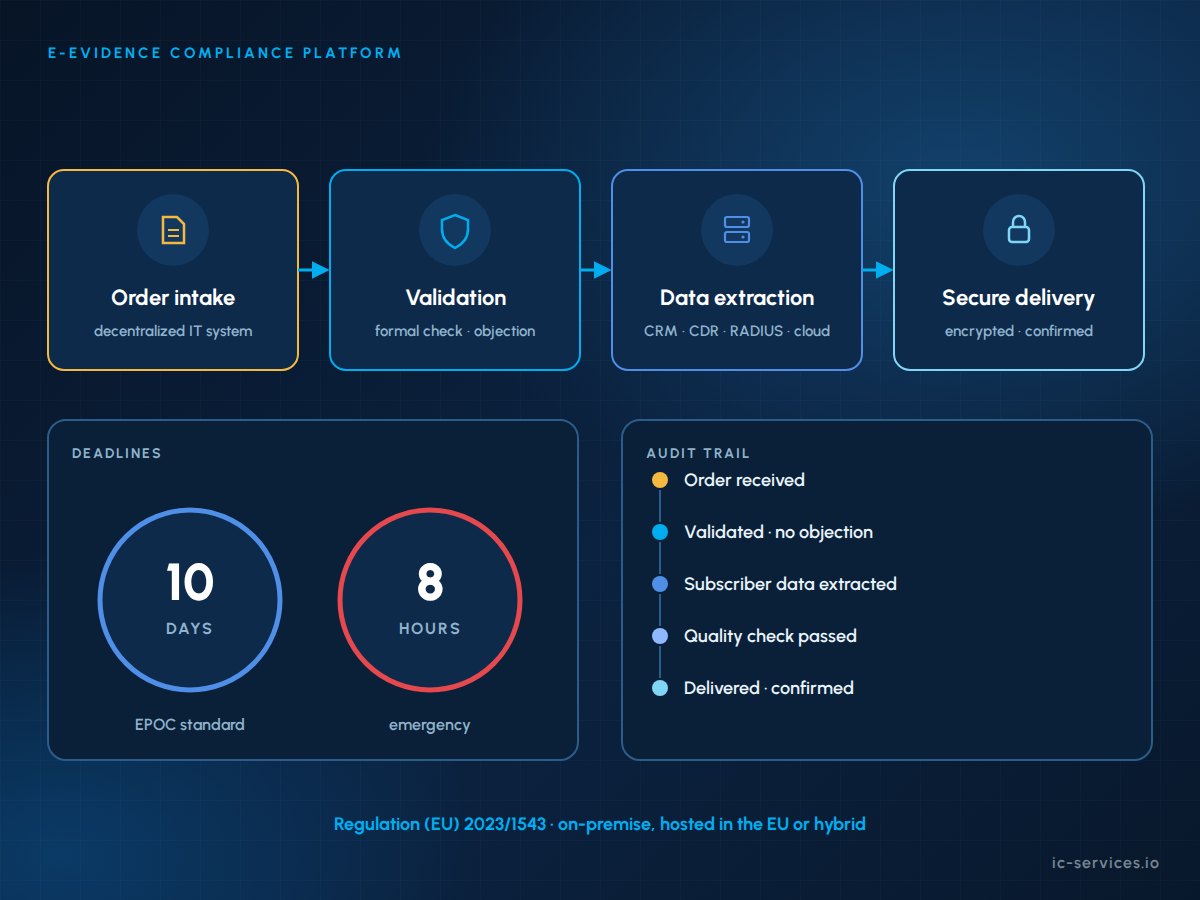
Una piattaforma di conformità in materia di prove elettroniche è un software che consente ai fornitori di servizi di ricevere, elaborare e rispondere agli ordini di produzione europei (EPOC) e agli ordini di conservazione europei (EPOC-PR) entro i termini previsti dalla legge. La piattaforma di conformità alle norme in materia di prove elettroniche ICS automatizza l’intero ciclo di vita previsto dal Regolamento (UE) 2023/1543, dall’accettazione dell’ordine all’estrazione dei dati, alla consegna e alla verifica.
Dati salienti
- Base giuridica: Il regolamento (UE) 2023/1543 è in vigore dal 18 agosto 2026. La direttiva (UE) 2023/1544 doveva essere recepita entro il 18 febbraio 2026.
- Scadenze: EPOC entro 10 giorni; in caso di emergenza, entro 8 ore.
- Conservazione: I dati EPOC-PR devono essere conservati per 60 giorni, prorogabili di 30 giorni.
- Sanzioni: fino a 2 % del fatturato annuo mondiale (art. 15).
- Scambio: un sistema informatico decentralizzato basato su e-CODEX, integrato da canali nazionali.
- Implementazione: in locale, ospitato in un’infrastruttura UE gestita da ICS, oppure in modalità ibrida.
Cosa prevede il regolamento sulle prove elettroniche?
Il Regolamento sulle prove elettroniche consente alle autorità giudiziarie di uno Stato membro dell’UE di ordinare a un fornitore di servizi di un altro Stato membro di produrre o conservare prove elettroniche. I fornitori devono rispondere direttamente, senza ricorrere alla tradizionale procedura di assistenza giudiziaria reciproca.
Le scadenze sono ravvicinate e il mancato rispetto delle norme può comportare costi elevati. Il documento di accompagnamento Direttiva (UE) 2023/1544 impone ai prestatori di servizi di designare un destinatario. I prestatori di servizi con sede nell’UE indicano una sede designata. I prestatori di servizi al di fuori dell’UE designano un rappresentante legale.
| Ordine | Scopo | Scadenza |
|---|---|---|
| EPOC | Produzione di prove elettroniche | 10 giorni dal ricevimento |
| EPOC (emergenza) | Produzione in caso di minaccia imminente | 8 ore dopo la ricezione |
| EPOC-PR | Conservazione in attesa di una successiva richiesta di produzione | Validità di 60 giorni, prorogabile di 30 giorni |
Moduli della piattaforma di conformità e-Evidence
La piattaforma è modulare. I fornitori iniziano con i moduli di cui hanno bisogno e ne aggiungono altri in seguito.
01
Motore di acquisizione degli ordini
Riceve gli ordini tramite il sistema informatico decentralizzato (basato su e-CODEX) e i canali nazionali. Analizza e convalida ogni certificato e ne classifica l'urgenza: 10 giorni o 8 ore.
02
Flussi di lavoro relativi alle obiezioni e ai chiarimenti
Gestione strutturata degli ordini incompleti o errati, dell’impossibilità di fatto e delle questioni relative alle immunità o alla libertà di stampa, utilizzando il modulo standardizzato previsto dal regolamento.
03
Modulo di estrazione dati
Adattatori per BSS/OSS, archivi CDR, CRM, log RADIUS/Diameter, archiviazione cloud e database. Gli adattatori personalizzati consentono di collegare i sistemi interni.
04
Gestione della conservazione
Blocca i dati richiesti per gli ordini EPOC-PR, tiene traccia del periodo di 60 giorni e di eventuali proroghe e sblocca i dati al termine dell'obbligo.
05
Registro di controllo e rendicontazione
Ogni fase viene registrata. I cruscotti e il monitoraggio degli SLA consentono di visualizzare a colpo d’occhio gli ordini in sospeso, le scadenze e i tempi di risposta.
06
Integrazione con lo stack ICS LI
Condivide l'architettura dello stack di intercettazione legale e conservazione dei dati ICS. Riutilizza gli stessi componenti di trasmissione sicura e di audit presenti in ICS LIMS e nella mediazione.
In che modo la piattaforma elabora un ordine?
1
Ricevi
L'ordine perviene tramite il sistema informatico decentralizzato o un canale nazionale e viene registrato con un timestamp.
2
Convalidare e classificare
La piattaforma verifica la correttezza e la completezza dei dati, identifica la categoria di dati e stabilisce la scadenza.
3
Revisione legale
Il vostro team legale esamina l'ordinanza. Se necessario, avvia una procedura di chiarimento o di opposizione.
4
Estratto
Gli adattatori recuperano i dati richiesti dai sistemi di origine pertinenti e li mappano alle categorie previste dal regolamento.
5
Approvare e consegnare
Un utente autorizzato approva il risultato e la piattaforma lo trasmette tramite i componenti di trasmissione sicura.
6
Documento
La traccia di audit registra ogni azione e il caso viene chiuso o archiviato.
Quali categorie di dati vengono mappate dalla piattaforma?
Il regolamento definisce quattro categorie di dati. Le richieste relative ai dati sul traffico e ai dati relativi ai contenuti sono soggette a condizioni di emissione più rigorose. Possono inoltre richiedere la notifica all’autorità incaricata dell’esecuzione, il che incide sui tempi di trasmissione dei dati.
Il modulo di estrazione dei dati assegna i dati di origine alle seguenti categorie:
- Dati dell'abbonato: ad esempio, nome, indirizzo e dettagli del contratto provenienti dal CRM o dal BSS.
- Dati richiesti al solo scopo di identificare l'utente: ad esempio, le assegnazioni di indirizzi IP ricavate dai log RADIUS/Diameter.
- Dati sul traffico: ad esempio, i record di connessione provenienti dagli archivi CDR e dall'OSS.
- Dati sul contenuto: ad esempio, file o messaggi archiviati su servizi di cloud storage e database.

Opzioni di implementazione
| Opzione | Descrizione | Vestibilità standard |
|---|---|---|
| In loco | Funziona nel proprio data center, sotto il proprio controllo | Operatori che dispongono già di un'infrastruttura LI |
| Ospitato | Funziona su un’infrastruttura UE gestita da ICS | Fornitori che preferiscono un servizio gestito |
| Ibrido | Combinazione di componenti in hosting e on-premise, ad esempio la gestione degli ordini in hosting con l'estrazione dei dati a livello locale | Operatori che conservano i dati nella propria rete |
Chi ha bisogno di una piattaforma per la conformità in materia di prove elettroniche?
01
Operatori di telecomunicazioni e ISP
I fornitori di servizi di comunicazione elettronica gestiscono già la LI e la conservazione dei dati. La piattaforma estende le stesse procedure agli ordini transfrontalieri. Per saperne di più
02
Cloud, SaaS e piattaforme digitali
Anche i servizi di hosting, di messaggistica e online che archiviano o trasmettono i dati degli utenti ricevono ordini. Per saperne di più
03
Fornitori extra-UE
I prestatori di servizi al di fuori dell'UE che offrono servizi nell'Unione devono designare un rappresentante legale. Per saperne di più
Perché ICS
01
Patrimonio di LI
Oltre 20 anni di esperienza nel settore delle telecomunicazioni e delle intercettazioni legali, con numerose autorizzazioni rilasciate dalla BNetzA.
02
Una pila
La piattaforma di conformità e-Evidence riutilizza componenti collaudati relativi alla distribuzione e all’audit provenienti da ICS LI e dalla conservazione dei dati.
03
Personale autorizzato
Il nostro team è in possesso di un nulla osta di sicurezza rilasciato dal Ministero federale dell’Interno tedesco.
04
Assistenza completa
Consulenza, integrazione, adattatori personalizzati e gestione delle operazioni da un unico partner.
Domande frequenti
Che cos’è una piattaforma di conformità in materia di prove elettroniche?
Una piattaforma di conformità in materia di prove elettroniche è un software che aiuta i fornitori di servizi a gestire gli ordini di produzione europei e gli ordini di conservazione europei. La piattaforma riceve gli ordini, ne verifica la validità, tiene traccia delle scadenze, estrae i dati richiesti dai sistemi interni e documenta ogni fase del processo. La piattaforma ICS copre l’intero ciclo di vita previsto dal Regolamento (UE) 2023/1543 e si integra con i sistemi LI e di conservazione dei dati esistenti.
Quando si applica il regolamento sulle prove elettroniche?
Il regolamento (UE) 2023/1543 è in vigore dal 18 agosto 2026. La direttiva di accompagnamento (UE) 2023/1544 doveva essere recepita nel diritto nazionale entro il 18 febbraio 2026. Essa impone ai prestatori di servizi di designare una sede designata o, se stabiliti al di fuori dell’UE, un rappresentante legale. I prestatori di servizi dovrebbero aver già messo in atto le procedure e i sistemi necessari.
Quali sono i termini di risposta per EPOC ed EPOC-PR?
È necessario rispondere a un EPOC entro 10 giorni dal ricevimento. Nei casi di emergenza, il termine è di 8 ore. Un EPOC-PR impone al fornitore di conservare i dati per 60 giorni. Tale periodo può essere prorogato di 30 giorni qualora l’autorità emittente necessiti di più tempo per una richiesta di produzione. La piattaforma tiene traccia automaticamente di ogni scadenza.
In che modo gli ordini vengono trasmessi ai fornitori?
Gli ordini e le relative comunicazioni vengono scambiati tramite un sistema informatico decentralizzato basato su e-CODEX. La piattaforma ICS riceve gli ordini attraverso questo sistema e tramite i canali nazionali. Analizza e convalida ogni ordine, ne classifica l’urgenza e avvia il flusso di lavoro. Ciò evita il reinserimento manuale dei dati relativi agli ordini e riduce il rischio di mancato rispetto delle scadenze.
Cosa succede se un fornitore non si attiene alle disposizioni?
Gli Stati membri stabiliscono le sanzioni applicabili in caso di violazioni. Ai sensi dell’articolo 15 del regolamento (UE) 2023/1543, le sanzioni pecuniarie possono arrivare fino al 2 % del fatturato annuo totale a livello mondiale del fornitore relativo all’esercizio finanziario precedente. Un processo documentato, basato su scadenze precise e dotato di una traccia di audit completa, aiuta i fornitori a dimostrare di aver gestito correttamente ogni ordine.
La piattaforma può essere ospitata da ICS?
Sì. La piattaforma può essere gestita in loco, nell’infrastruttura UE gestita da ICS o in un ambiente ibrido. In una configurazione ibrida, ad esempio, la gestione degli ordini può avvenire nell’ambiente ospitato, mentre l’estrazione dei dati rimane all’interno della vostra rete. ICS offre inoltre servizi di sede legale e di rappresentanza legale, consentendo ai fornitori extra-UE di combinare tecnologia e presenza legale.
Gestisci con sicurezza gli ordini di produzione europei
Scopri come la piattaforma riceve, elabora e documenta gli ordini EPOC ed EPOC-PR nel tuo ambiente.